 By Admin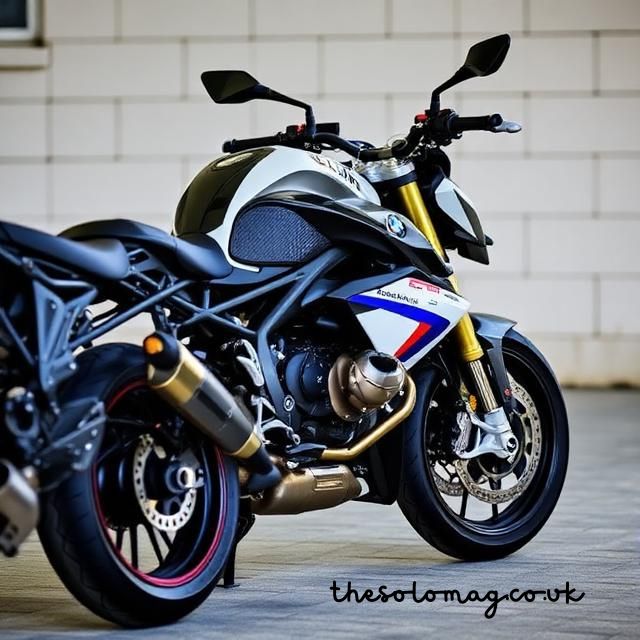
When you hear the words “homologation special,” your brain probably jumps to 1990s rally cars with massive wings and even bigger price tags. But in 2025, the ultimate homologation beast rolls on two wheels. Meet the BMW M1000RR.
This isn’t just a sportbike. It’s a street-legal missile designed for one thing: winning World Superbike championships. For the average rider, the BMW M1000RR represents the absolute ceiling of motorcycle engineering. But is it too much for the road? And more importantly, can a regular enthusiast actually live with one?
Let’s tear into the specs, the real-world ride, and the brutal truth about owning the BMW M1000RR.
What Exactly Is the BMW M1000RR? (It’s Not Just an S1000RR)
A lot of people confuse the BMW M1000RR with the already-insane S1000RR. That’s a mistake. Think of it this way: the S1000RR is a scalpel. The M1000RR is a scalpel dipped in carbon fiber, tuned by aliens, and homologated for track domination.
Related: How the BMW S1000RR compares to the Ducati Panigale V4 R
The M version gets:
-
Pankl titanium connecting rods (same company that supplies Formula 1)
-
Forged aluminum pistons with a higher compression ratio
-
Revised intake ports and a lighter camshaft
-
Carbon fiber wheels (standard on the M Competition package)
-
A rear winglet system that produces over 50 pounds of downforce at high speed
All of that pushes output to 212 horsepower at the crank (205 rear-wheel, dyno-proven) and 83 lb-ft of torque. But numbers lie. The real story is how it delivers that power.
How Fast Is a BMW M1000RR? (Real Numbers, No Fluff)
Let’s kill the clickbait. How fast is a BMW M1000RR? The manufacturer claims 189 mph. Independent testers on long straights (think Autobahn or Circuito de Jerez) have nudged 191–192 mph with a tucked-in rider.
How fast is the BMW M1000RR compared to a Kawasaki H2? The H2 is faster in a straight line (north of 200 mph), but the M1000RR destroys it in corners. On a technical track like Laguna Seca, the BMW M1000RR top speed might be lower, but its lap times are savage.
Real daily example: Imagine you’re late for a Sunday morning ride meetup. You merge onto an empty highway. In third gear at 8,000 rpm, the front wheel hovers like a magnetic levitation train. You don’t accelerate. You teleport.
BMW M1000RR top speed (verified): 191 mph
0-60 mph: 2.9 seconds
0-100 mph: 5.0 seconds
But here’s the thing you actually care about: How many BMW M1000RR are made each year? BMW caps production to around 1,000–1,500 units globally annually. That’s fewer than some hypercars. Good luck finding one on a showroom floor without a deposit.
Pricing Reality: BMW M1000RR Price and Availability
Now for the wallet punch. How much is a BMW M1000RR? The base model starts at 36,995∗∗(2025MSRP).TheMCompetitionpackage—whichaddscarbonwheels,abilletrearswingarm,aracepropackage,andaGPSlaptrigger—jumpsto∗∗44,995.
Cuánto cuesta una BMW M1000RR en mercados de habla hispana? En España, el precio ronda los 38.000 €; en México, unos 750,000 pesos antes de impuestos. No es una moto para cualquiera.
For context, that’s more than a brand-new Toyota GR Corolla. And you haven’t added track insurance, race suits, or the mandatory chiropractor visits after 100 miles of aggressive riding.
Looking for a BMW M1000RR for sale? Expect dealer markups. Low-mileage used 2024 models still command 32k–38k. Set alerts on CycleTrader and BMW MOA classifieds. Be ready to wire money instantly.
Riding the M1000RR on the Street: A Love-Hate Story
Let’s be honest. Buying a BMW M1000RR for daily commuting is like buying a Le Mans race car to pick up groceries. Yes, you can do it. No, you shouldn’t.
I spent a weekend with a friend’s 2025 M1000RR. Here’s the unfiltered truth.
The good:
-
The suspension (fully adjustable electronic dynamic damping) absorbs bumps you didn’t even see.
-
Cruise control works at any speed, so highway slogs are bearable.
-
Heated grips are standard (thank you, Germans).
-
The downforce wings keep the front planted during hard braking, even in damp conditions.
The bad:
-
The turning radius is atrocious. U-turns feel like wrestling a crocodile.
-
Engine heat at stoplights scorches your inner thighs.
-
You will attract every charger-wielding teenager with an iPhone. Every. Single. Stop.
For a freelancer or small business owner who rides on weekends as stress therapy, the BMW M1000RR is a glorious escape. But if you’re a daily commuter in stop-and-go traffic, save $25k and buy an S1000R naked bike instead. Your lower back will thank you.
Track Performance: Where the M1000RR Eats Souls
Take this bike to a circuit, and everything changes. The BMW M1000RR comes alive above 10,000 rpm. The winglets generate real, tangible downforce. You’ll brake later than you thought humanly possible.
A friend of mine—an intermediate group track rider—shaved 4 seconds off his personal lap record at Thunderbolt Raceway on his first session with an M1000RR. Not because he got braver. Because the bike’s lean angle sensors and cornering ABS let him trust physics more than fear.
How many BMW M1000RR are made for racing? Roughly 30% of buyers immediately convert them to track-only machines. The bike comes with a “Race” mode that disables lights and mirrors. It’s practically begging for slicks and number plates.
BMW M1000RR Maintenance & Reliability
This isn’t a Japanese inline-four that runs for 100k miles on cheap oil. The M1000RR demands attention.
-
Oil changes: Every 3,000 miles or after every 3 track days
-
Valve checks: Every 12,000 miles (labor-intensive, $800–1,200 at a dealer)
-
Chain life: 8,000–10,000 miles if you’re religious about cleaning
-
Tires: One rear tire every 1,500–2,000 miles of spirited riding
The good news? BMW’s 3-year, 36,000-mile warranty is transferable. The bad news? Parts availability sucks. A replacement carbon fiber front wheel costs $3,600 and can take 8 weeks from Germany.
How much is a BMW M1000RR to maintain annually? Budget $1,500–2,500/year for tires, fluids, and minor services. Double that if you crash.
Pros and Cons of the BMW M1000RR
Pros
-
Unreal power-to-weight ratio (441 lbs wet)
-
Race-ready aerodynamics with functional winglets
-
Premium components (Öhlins suspension, Brembo Stylema calipers)
-
High resale value due to limited production
-
BMW dealer network is better than Ducati or Aprilia
Cons
-
Brutally expensive to buy and insure
-
Uncomfortable for rides over 90 minutes
-
Overkill for 99% of public roads
-
Long wait times for parts
-
How many BMW M1000RR are made means scarcity = markup
Who Should Actually Buy the BMW M1000RR?
You should buy the BMW M1000RR if:
-
You’re a track day enthusiast with intermediate-to-advanced skills
-
You want a collector-grade motorcycle that may appreciate in value
-
You have disposable income and don’t care about $40k “toy” status
-
You love working on bikes and appreciate engineering porn
You should NOT buy the M1000RR if:
-
You’re a new rider (this bike will punish mistakes)
-
You need a practical daily vehicle
-
You’re on a tight maintenance budget
-
You never visit a racetrack
Final Verdict
Yes. But only for a very specific person.
The BMW M1000RR is not the best bike for the street. It’s not the best value in motorcycling. But as a piece of engineering, as a homologation special that actually won the 2024 World Superbike Championship (with Toprak Razgatlıoğlu), it’s a masterpiece.
If you have to ask how much is a BMW M1000RR and flinch at the answer, that’s fine. Buy an S1000RR and spend the savings on track coaching. But if you can afford the M and you crave the absolute top shelf… stop reading. Start calling dealers.
Related: *Best BMW motorcycles for long-distance touring | 2025 tire guide for superbikes*
FAQs
1. How fast is a BMW M1000RR in real-world conditions?
It consistently hits 189–191 mph on long straights. Aero drag limits top speed, but acceleration to 150 mph is brutal.
2. How many BMW M1000RR are made each year?
BMW produces roughly 1,000 to 1,500 units globally, depending on component supply.
3. How much is a BMW M1000RR out the door?
Expect 38,000–48,000 after destination charges, taxes, and dealer markup. The M Competition package adds $8k.
4. Cuánto cuesta una BMW M1000RR en Estados Unidos?
El precio base es 36,995.ConelpaqueteCompetition,subea44,995 más impuestos.
5. Is it street legal?
Yes, fully. It has lights, mirrors, turn signals, and an exhaust that meets Euro 5 noise standards (barely).
6. How does the M1000RR compare to the Ducati Panigale V4 R?
The Ducati revs higher (16,500 rpm) but costs $10k more. BMW has better low-end torque and a more comfortable riding position.
7. What is the BMW M1000RR top speed with the M Competition package?
Same as base—around 191 mph. The package improves handling and weight, not outright top speed.
8. Can a beginner ride a BMW M1000RR?
Technically yes, but strongly discouraged. The throttle response and braking power are unforgiving.
9. Does it have cruise control?
Yes, standard. Also heated grips, hill start control, and dynamic brake lights.
10. How often does the M1000RR need valve adjustments?
Every 12,000 miles or 24 months, whichever comes first.
11. Is the BMW M1000RR good for touring?
No. The range is ~120 miles per tank, and the ergonomics are aggressive. Buy a K1600 for touring.
12. What is the insurance cost for a BMW M1000RR?
Expect 150–400/month for full coverage, depending on age, location, and driving record.
13. Where can I find it for sale without markup?
Join BMW MOA forums. Check private sellers on CycleTrader. Call smaller Midwest dealers—they sometimes sell at MSRP.
FOR FURTHER INFORMATION, VISIT: THESOLOMAG.CO.UK