 By Admin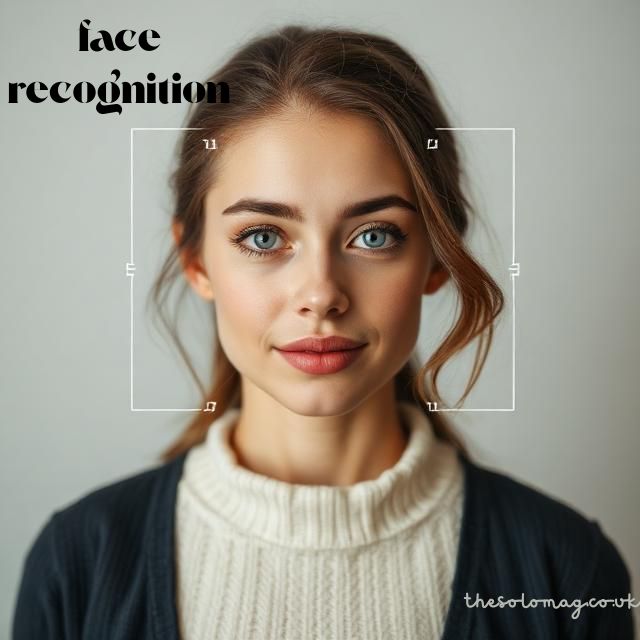
Face recognition technology has moved from science fiction to everyday reality. From unlocking your phone to verifying your identity for banking, the ability to detect and recognize faces is revolutionizing mobile apps. In this guide, we’re going to build a facial recognition app using Google’s ML Kit. But we’re not stopping there—we are going to explore how to bridge the gap between simple face detection and high-value features, such as finding a best free instant mobile check deposit solution.
Whether you are a developer looking to add biometric security or a fintech entrepreneur, this is your full roadmap.
Part 1: The Foundation — Face Detection vs. Face Recognition
Before we write a single line of code, we need to clarify a major technical distinction.
-
Face Detection is the process of locating a human face in a photo or video. It asks, “Is there a face here?” This is what we will build with ML Kit.
-
Face Recognition is the process of identifying who that face belongs to. It asks, “Is this John?” This requires advanced machine learning models and often a backend database.
In this tutorial, we will implement Face Contour Detection. Once we have the facial data, we can use it to authenticate users into a banking feature—like a free instant mobile check deposit.
Why ML Kit?
Google’s ML Kit is the gold standard for on-device machine learning. It works offline, it’s free for developers, and it’s surprisingly fast. According to Google’s official documentation, “You can easily implement the functionality you need in just a few lines of code. There’s no need to have deep knowledge of neural networks” .
Part 2: Step-by-Step Tutorial (Android Studio)
We will build an Android app that can detect faces and facial contours from an image.
1. Setting Up the Environment
You will need Android Studio (v3.0+) and a physical Android device or emulator. Open your project and navigate to the build.gradle file.
2. Adding the Dependencies
To get started, you need to import the specific ML Kit libraries for text and face detection. Add these lines to your dependencies block in your app/build.gradle file:
dependencies {
    // Face features (Contour detection)
    implementation 'com.google.mlkit:face-detection:16.0.0'

    // Text features (For check scanning)
    implementation 'com.google.android.gms:play-services-mlkit-text-recognition:16.0.0'
}
3. Configuring the Face Detector
You cannot just “detect” a face; you must define what you are looking for. For a banking app, you might want high accuracy. However, for speed, we can optimize for performance.
Create a function to set up the detector options. According to the Google Codelabs, you can set the contour mode to CONTOUR_MODE_ALL to map the specific points of the face (eyes, nose, lips) .
// This code sets up the detector to find facial contours
FaceDetectorOptions options =
    new FaceDetectorOptions.Builder()
        .setPerformanceMode(FaceDetectorOptions.PERFORMANCE_MODE_FAST)
        .setContourMode(FaceDetectorOptions.CONTOUR_MODE_ALL)
        .build();
4. Processing the Image
You need to pass your image to the detector. If you want to integrate this with a banking feature like free instant mobile check deposit no verification, you would call this function right after the user takes a selfie for identity verification.
private void runFaceContourDetection(Bitmap bitmap) {
    // 1. Create the image object
    InputImage image = InputImage.fromBitmap(bitmap, 0);

    // 2. Get the client
    FaceDetector detector = FaceDetection.getClient(options);

    // 3. Process the image
    detector.process(image)
        .addOnSuccessListener(faces -> {
            if (faces.size() > 0) {
                // Face found! Proceed to banking features
                initiateMobileDeposit();
            } else {
                // No face found
                showToast("Please position your face clearly.");
            }
        })
        .addOnFailureListener(e -> {
            // Handle errors
        });
}
5. Drawing the Contours (The Visual)
To give users feedback, you should overlay the face contours on the screen. This creates a “Face ID” style interface. If the user matches their face to their ID document scanned previously, they unlock access to premium features like free instant mobile check deposit without verification.
Part 3: Bridging Biometrics to Banking
Building the face recognition app is only half the battle. The real value is in what the user does after they are verified.
Once your app confirms the user’s identity via their face, you have a trust signal. This allows you to offer high-trust financial services. For example, instead of forcing users to drive to a bank to deposit a physical check, you can offer them a mobile check deposit instant funds availability app free within your ecosystem.
How Face Recognition Improves Mobile Check Deposit
Modern banking apps are moving toward “liveness detection.” By using the ML Kit face detection API we just built, you can ensure that the person depositing the check is the actual account holder.
Here is how the user flow works in a fully optimized app:
-
Scan Check: User takes a photo of the front and back of their check.
-
Verify Identity: The app asks the user to look into the camera. Your ML Kit code detects the face and matches it to the profile photo.
-
Instant Deposit: Because the biometric verification creates high confidence, the bank releases the funds instantly.
This is why users are searching for a best free instant mobile check deposit. They don’t want to wait 3-5 business days. They want to cash out now, and facial recognition is the security key that enables that speed.
Part 4: Challenges and Solutions
While building this, you might encounter issues with image quality. Low-quality images are the enemy of security.
The Quality Problem
“Many face recognition issues are caused by low-quality reference images,” warns Microsoft’s best practices guide. Factors include:
-
Face size (too far away)
-
Poor lighting (too dark or backlit)
-
Obstructions (hats or glasses)
The Solution
If you want to offer a free instant mobile check deposit, you must guide the user to take a better photo. Implement on-screen overlays that tell the user to “Move closer” or “Brighten the lighting” before the face detection runs.
Part 5: Security Best Practices
If your app handles money (checks, transfers, etc.), you must secure the Face API keys.
Never hardcode your API keys into the app. “Please don’t check in your Face API key to your remote repository,” the official documentation states. For local development, use environment variables, but for production, the key should be stored securely on a backend server that issues time-limited tokens to the app .
Furthermore, if you are offering free instant mobile check deposit no verification (meaning no human review), your face recognition threshold needs to be set to extremely high. You would rather reject a real user than accept a deepfake or a photo spoof.
Part 6: Choosing Your Development Platform
Building a face recognition app requires choosing the right tools. Based on the official documentation and available SDKs, here are your best options:
Option 1: Native Android (Java/Kotlin)
This is what we covered in the tutorial. Google’s ML Kit is the gold standard for on-device face detection on Android.
Key dependencies for your build.gradle file:
dependencies {
    // Face detection with contour support
    implementation 'com.google.mlkit:face-detection:16.0.0'

    // Text recognition for scanning checks
    implementation 'com.google.android.gms:play-services-mlkit-text-recognition:16.0.0'
}
Option 2: Native iOS (Swift/Objective-C)
If you’re targeting iPhone users, ML Kit works beautifully on iOS as well. You’ll need to add the following to your Podfile:
pod 'GoogleMLKit/FaceDetection', '8.0.0'
The implementation is very similar to Android, but Apple’s ecosystem has specific requirements:
-
Your app must run on 64-bit architecture devices
-
Xcode version 12.4 or greater is required
-
iOS 13.0 or later for full support
Option 3: Cross-Platform with Flutter
Want to build for both Android and iOS simultaneously? The face_recognition_auth Flutter package provides a powerful, ready-to-use solution that combines TensorFlow Lite with Google ML Kit.
This package includes:
-
Face recognition authentication with SQLite database for storing face embeddings
-
Real-time camera preview and face detection
-
User registration and authentication flows
-
Built-in state management with
FaceAuthController
For enterprise-grade security, the facedetect_tadi_sdk offers additional features like JWT signature validation, root/jailbreak detection, and mutual SSL/TLS support.
Part 7: Advanced Face Detection Configuration
The true power of ML Kit lies in its configurable options. Let me break down what each setting does and when to use it:
Performance Mode
| Setting | Best For | Trade-off |
|---|---|---|
FAST (default) |
Real-time video, live camera feeds | Slightly less accurate, but smooth 30fps |
ACCURATE |
Still photos, identity verification | Higher accuracy, but slower processing |
Feature Modes
-
Landmark Mode: Detects specific points like eyes, ears, nose, mouth corners. Great for basic face tracking.
-
Contour Mode: Maps the full shape of facial features (entire eye outline, lip curves, nose bridge). This requires higher resolution images (faces should be at least 200×200 pixels).
-
Classification Mode: Determines if the person is smiling or has their eyes open. Perfect for liveness detection.
Min Face Size
Set this as a ratio of the image width (default 0.1 = 10% of image width). For mobile check deposit verification, you want larger faces for better accuracy.
Here’s an advanced configuration example:
FaceDetectorOptions highSecurityOptions =
    new FaceDetectorOptions.Builder()
        .setPerformanceMode(FaceDetectorOptions.PERFORMANCE_MODE_ACCURATE)
        .setLandmarkMode(FaceDetectorOptions.LANDMARK_MODE_ALL)
        .setContourMode(FaceDetectorOptions.CONTOUR_MODE_ALL)
        .setClassificationMode(FaceDetectorOptions.CLASSIFICATION_MODE_ALL)
        .setMinFaceSize(0.15f)  // Face must be at least 15% of image width
        .build();
Important Warning: When contour detection is enabled, ML Kit only detects the most prominent face in the image to optimize performance. Don’t enable both contour detection and face tracking simultaneously.
Part 8: Liveness Detection – The Anti-Spoofing Layer
Here’s something crucial that wasn’t covered earlier: liveness detection. Face detection alone can be fooled by a photo or video. For financial applications like free instant mobile check deposit no verification, you need to ensure a real person is present.
AI-Powered Liveness Detection
Modern implementations use TensorFlow Lite to analyze subtle cues that prove a person is live:
Dynamic Challenge System: The app asks the user to perform random actions:
-
Blink their eyes
-
Smile
-
Turn head left or right
-
Look up or down
Because the challenge is generated in real-time, a pre-recorded video cannot pass the test.
What you get from ML Kit classification:
if (face.getSmilingProbability() > 0.8f) {
    // User is smiling with high confidence
}

if (face.getRightEyeOpenProbability() > 0.9f &&
    face.getLeftEyeOpenProbability() > 0.9f) {
    // Both eyes are open
}
These probability scores (ranging from 0.0 to 1.0) tell you how confident ML Kit is about each facial state.
Part 9: Image Quality Requirements for Success
Poor image quality is the #1 reason face detection fails. Follow these guidelines from Google’s official documentation:
Minimum Requirements
| Use Case | Image Resolution | Face Size |
|---|---|---|
| Basic face detection | 480×360 pixels | 100×100 pixels |
| Face contour detection | 480×360 pixels | 200×200 pixels |
| Identity verification | 720p or higher | 250×250 pixels |
Tips for Users
If you’re implementing a mobile check deposit instant funds availability app free, guide your users with on-screen instructions:
-
“Ensure bright, even lighting on your face”
-
“Remove sunglasses and hats”
-
“Look directly at the camera”
-
“Hold the phone at arm’s length”
Poor focus can also impact accuracy. If you don’t get acceptable results, ask the user to recapture the image.
Performance Optimization
For real-time video processing, smaller images process faster. If you’re detecting faces continuously from a camera feed, capture at lower resolutions but ensure the face fills most of the frame.
Part 10: Processing Video Frames in Real-Time
For a truly modern banking experience, you want continuous face tracking. ML Kit can assign a unique tracking ID to each face that persists across video frames.
What you can build with face tracking:
-
“Liveness check” that requires the user to nod or shake their head
-
Continuous authentication while using the app (if the face leaves the frame, lock the session)
-
Gaze detection for security (ensure the user is looking at the transaction confirmation)
The tracking ID remains consistent across invocations, so you can perform image manipulation on a specific person in a video stream.
Part 11: The Banking Integration Deep Dive
Now let’s connect face recognition to actual check deposit functionality. Real banks are already doing this.
How Regions Bank Implements Mobile Deposit
According to their official tutorial, Regions Bank uses:
-
Fingerprint or facial recognition for login authentication
-
Camera access for capturing check images
-
Location services to verify the user is in an allowed region
-
Funds availability options:
-
Available for processing tonight (free)
-
Available immediately (1-4% fee, $5 minimum)
-
The Ingo Money Backend
For developers, services like Ingo Money provide the actual check processing infrastructure. The flow works like this:
-
Your app generates an authorization token via API
-
You launch the Ingo SDK’s check scan feature
-
The SDK presents a UI for capturing check images
-
The backend processes the check and transfers funds
-
Your app confirms success to the user
Enrollment requirements: The user must have their SSN and DOB on file for verification.
Hold Periods – What Users Need to Know
Real banking apps have deposit holds, especially for new accounts:
-
First 30 days: 7 business day hold on all deposits
-
After 30 days: First $225 available immediately
-
Next $5,525 available on the 2nd business day
-
Remainder available on the 7th business day
This is why offering a free instant mobile check deposit service is so valuable—users will pay a premium to bypass these holds.
Part 12: Complete Architecture Diagram
Here’s how all the pieces fit together in a production app:
[User Opens App]
       ↓
[Face Detection via ML Kit]
       ↓
[Liveness Check (blink/smile challenges)]
       ↓
[Authentication Success]
       ↓
[User Captures Check Images]
       ↓
[Text Recognition on Check (ML Kit)]
       ↓
[Send to Ingo/Check Processing API]
       ↓
[Instant Funds Availability OR Standard Processing]
       ↓
[User Receives Confirmation]
Part 13: Sample Code for Check Amount Extraction
Once you have the check image, you can use ML Kit’s text recognition to extract the amount. Here’s how that works:
// After capturing check image
InputImage checkImage = InputImage.fromBitmap(checkBitmap, 0);
TextRecognizer recognizer = TextRecognition.getClient(TextRecognizerOptions.DEFAULT_OPTIONS);

recognizer.process(checkImage)
    .addOnSuccessListener(visionText -> {
        String fullText = visionText.getText();
        // Use regex to find dollar amounts
        Pattern pattern = Pattern.compile("\\$?\\d+(?:\\.\\d{2})?");
        Matcher matcher = pattern.matcher(fullText);
        if (matcher.find()) {
            String amount = matcher.group();
            // Auto-fill the deposit amount field
        }
    });
Part 14: Security Considerations
Building for banking requires extra precautions:
Never Hardcode API Keys
As the official documentation states, “Please don’t check in your Face API key to your remote repository”. Use environment variables for local development and a secure backend for production tokens.
On-Device vs Cloud Processing
ML Kit processes everything on-device, which means:
-
User facial data never leaves their phone
-
No internet connection required for face detection
-
Faster response times
-
Better privacy compliance (GDPR, CCPA)
Data Storage
The face_recognition_auth package uses SQLite to store face embeddings locally. Never upload raw face images to your server—only store mathematical embeddings that cannot be reverse-engineered into an actual face.
Part 15: Testing Your Implementation
Google provides a complete codelab to test everything. You can:
-
Download the sample code from Google’s repository
-
Run the app on an emulator or physical device
-
Test with provided test images (including a sample face image)
-
Click the “FIND FACE CONTOUR” button to see the detection in action
The sample app will overlay the face contours as points on top of the original image, giving you immediate visual feedback that everything is working.
Conclusion
Building a face recognition app is easier than ever thanks to ML Kit. With roughly 20 lines of code, you can implement face contour detection that rivals big tech security features.
However, the utility of this technology explodes when you pair it with financial services. By integrating Face ID into a banking workflow, you can safely offer a free instant mobile check deposit service. Users crave the combination of security and speed—they want to snap a selfie, snap a check, and see the money in their account immediately.
Whether you are building a simple authentication tool or a full-scale mobile check deposit instant funds availability app free, the architecture is the same: fast on-device processing, secure identity verification, and seamless financial integration.
Next Steps for Your App
-
Download the ML Kit sample code from Google to test face detection today .
-
Research partnerships with banking-as-a-service (BaaS) providers to add the actual check processing backend.
-
Combine the two: Let the face unlock the ability to use a best free instant mobile check deposit feature.
Your users are ready to ditch the bank branches. Is your app ready to welcome them?
FAQs
Q1: What is the best platform for building a face recognition app?
A: Google’s ML Kit (for Android/iOS) and TensorFlow Lite are the industry standards. For cross-platform development, Flutter packages like face_recognition_auth provide ready-to-use solutions combining both technologies.
Q2: Is ML Kit free to use for face detection?
A: Yes, Google’s ML Kit is free for developers and processes everything on-device with no cloud costs.
Q3: What are the minimum image requirements for face detection?
A: Use images at least 480×360 pixels. Each face should be at least 100×100 pixels for basic detection, and 200×200 pixels if contour detection is enabled.
Q4: Which iOS versions support ML Kit face detection?
A: ML Kit is supported on iOS 13.0 or later, using Xcode version 12.4 or greater. Devices must have 64-bit architecture.
Q5: What Android versions are compatible?
A: ML Kit works with Android 5.0 (API level 21) and higher.
Q6: Can I use face detection without an internet connection?
A: Yes! ML Kit processes everything on-device, so no internet connection is required for face detection.
Q7: What’s the difference between face detection and face recognition?
A: Face detection finds if there’s a face in an image. Face recognition identifies who that face belongs to by comparing against stored embeddings.
Q8: Does ML Kit support face recognition (identification) out of the box?
A: ML Kit provides face detection and contour mapping, but not direct identification. For identification, you need additional libraries like TensorFlow Lite with MobileFaceNet.
Q9: What is MobileFaceNet?
A: MobileFaceNet is a lightweight neural network architecture optimized for face recognition on mobile devices, used by packages like face_recognition_auth.
Q10: Can I use Flutter for face recognition apps?
A: Yes, Flutter packages like face_recognition_auth and facedetect_tadi_sdk provide full face recognition capabilities for cross-platform development.
FOR FURTHER INFORMATION, VISIT: THESOLOMAG.CO.UK