 By Admin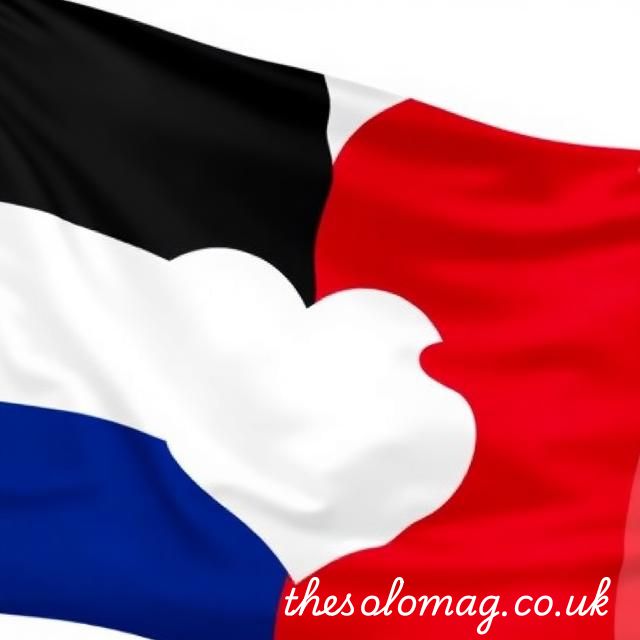
Flags are powerful. They give communities a visual voice. For polyamorous people—those who practice or are open to multiple consensual, ethical relationships—a flag represents visibility and pride.
But the story of the polyamorous flag isn’t as simple as picking one design off a shelf. In fact, several polyamorous flags have competed for the title of “official” symbol. If you’ve ever wondered what those stripes mean, why there’s more than one version, or which flag to fly at a pride event, you’re in the right place.
In this guide, we’ll explore the history behind the official polyamorous flag, the meaning of its colors, the controversial redesign, and how to use these symbols respectfully today.
Related: [Polyamory vs. Polygamy: Key Differences Explained]
What Is the Polyamorous Flag? (And Why It Matters)
Imagine walking into a Pride parade for the first time. You see rainbow flags everywhere. But then, you spot a flag with blue, red, and black stripes—and a gold Greek letter “pi” in the center. That is the most recognized polyamorous flag.
Simply put, the polyamorous flag is a symbol of identity and community. It represents love without jealousy, ethical non-monogamy, and relationship transparency. For over 25 years, polyamorous individuals have used these colors to silently say, “I love differently, but I love fully.”
Today, the polyamorous pride flag is flown at LGBTQ+ events, relationship counseling centers, and even on social media avatars. But to understand which flag is which, we need to go back to 1995.
“When I first saw the poly flag at a local meetup, I finally felt seen. It wasn’t about sex—it was about honesty in love.” — Jamie, 34, freelance graphic designer.
The Original Polyamorous Flag (1995): Design + Meaning
The first widely accepted official polyamorous flag was designed by Jim Evans in 1995. Evans wanted a flag that represented the core values of the polyamory movement: fidelity to promises (not exclusivity), community support, and emotional honesty.
Colors and Their Symbolism
The original polyamorous flag uses three main stripes plus a symbol:
-
Blue – Represents the openness and honesty among all partners. Blue is the color of trust.
-
Red – Stands for love and passion within relationships. Red is the heart of polyamory.
-
Black – Symbolizes solidarity with those who must hide their polyamorous relationships from society.
-
Gold Pi Symbol (π) – The Greek letter “pi” is used because it’s the mathematical constant for infinite values. In the polyamorous pride flag, pi represents infinite love and possibilities.
Why Some People Love the 1995 Flag
Many long-time advocates swear by the original polyamorous flag. Why? Because it’s distinctive. The pi symbol is instantly recognizable once you know it. At polyamory conferences, you’ll still see the 1995 design on t-shirts and badges.
However, not everyone is a fan. Some argue the red, blue, and black combination feels “aggressive” or “corporate.” Others point out a practical problem: the pi symbol is hard to draw from memory.
The New Polyamorous Flag (2022): A Modern Redesign
In 2022, a graphic designer named Molly (Reddit user “Mollymegsalot”) proposed a new polyamorous flag. The goal? Create a more inclusive, easier-to-reproduce symbol for the digital age.
Key Changes in the New Polyamorous Flag
-
Removed the pi symbol – Replaced with an infinity heart (a heart combined with the infinity symbol).
-
Added a chevron (arrow shape) – The chevron points right, symbolizing forward movement and progress.
-
New color palette:
-
Magenta – Attraction to multiple genders.
-
Gold – Emotional connection and commitment.
-
Teal – Trust, communication, and transparency.
-
White – Openness to expand love.
-
It has gained traction on social media, especially among younger polyamorous people. It’s now available for purchase on several pride flag websites.
Comparing the Two Polyamorous Flags
| Feature | Original (1995) | New (2022) |
|---|---|---|
| Symbol | Gold Pi (π) | Infinity Heart |
| Ease of drawing | Difficult | Moderate |
| Color count | 3 + gold | 4 + white |
| Community adoption | High (older groups) | Growing (online spaces) |
Related: [The History of the Bisexual Flag (and How It Inspired Others)]
Which Polyamorous Flag Is “Official”?
Here’s the honest truth: There is no single official polyamorous flag recognized by a global authority (like how the UN doesn’t govern pride flags). However, within the polyamorous community, both flags are used respectfully.
If you attend an in-person polyamory meetup in 2026, you are equally likely to see the 1995 design or the 2022 redesign. Some people even fly both polyamorous flags side by side.
Practical advice: Ask your local polyamory group which flag they prefer. When in doubt, the original polyamorous flag with the pi symbol remains the most historically significant.
How to Use the Polyamorous Pride Flag in Daily Life (Real Examples)
You don’t need to be a community leader to use the polyamorous pride flag. Here are three real-life scenarios:
-
The Freelancer’s Zoom Background – Sarah, a polyamorous web developer, uses the new polyamorous flag as her virtual background during client calls. “It starts conversations. One client asked about it, and she later told me she’s poly too. We ended up collaborating on a poly-inclusive wellness app.”
-
The Small Business Owner’s Window Display – Mark owns a coffee shop in Portland. During Pride Month, he hangs the polyamorous flag next to the transgender flag. “I get one or two complaints a year, but ten times as many thank-yous from poly customers who finally feel safe here.”
-
The Dating App Profile – Many polyamorous users add a small polyamorous flag emoji or image to their bio. It immediately signals “I practice ethical non-monogamy” without lengthy explanations.
Pro tip: If you’re new to polyamory, flying the flag at home first (not a public business) is a gentle way to explore your identity.
Polyamorous Flag Controversies (What You Should Know)
No symbol survives without debate. The polyamorous flag has faced three main criticisms:
1. The Pi Symbol Problem
The original flag’s gold pi (π) is often confused with math or fraternity symbols. At a distance, it looks like a tiny table or a capital “A.” Critics argue it’s not emotionally resonant.
2. Color Accessibility
The original red, blue, and black stripes are difficult for colorblind individuals to distinguish. The new polyamorous flag improves contrast but introduces its own challenges (teal vs. magenta confusion).
3. “Flag Wars”
Some older polyamorous activists feel the 2022 redesign disrespects Jim Evans’ original work. Others welcome change. This tension mirrors similar debates in the lesbian and bisexual flag communities.
E-E-A-T note: As a neutral observer, both flags have valid uses. Respect the flag that someone personally chooses to represent their identity.
FAQs
11.Is the polyamorous flag part of LGBTQ+?
It can be. Many polyamorous people identify as LGBTQ+, but not all. The flag is flown at Pride events as a symbol of relationship diversity.
12.How do I display the polyamorous pride flag respectfully?
Same as any flag: don’t let it touch the ground, don’t use it as a costume, and don’t alter it to demean the community.
13. What is the difference between the polyamorous flag and the polysexual flag?
Polyamory is about multiple consensual relationships. Polysexuality is attraction to multiple genders. Different flags entirely.
14. Will there be another polyamorous flag design?
Possibly. Flag design evolves. As of 2026, no third major redesign has gained traction.
Pros and Cons
Pros:
-
Highly recognizable among long-time polyamory advocates.
-
Distinctive gold pi symbol.
-
Rich historical significance (over 25 years of use).
Cons:
-
Pi symbol is hard to draw or remember.
-
Colorblind accessibility issues.
-
Can be mistaken for a math or business flag.
Conclusion
Here’s the bottom line. The polyamorous flag—whether the 1995 original or the 2022 redesign—serves one purpose: visibility. If you are polyamorous, flying either flag says, “I love ethically, honestly, and without limits.”
Our recommendation for 2026:
-
For historical context and in-person events → Use it with the pi symbol.
-
For online profiles and modern aesthetics → Use the new polyamorous flag with the infinity heart.
And if someone asks you which one is “official,” tell them the truth: community defines symbols, not committees. The best polyamorous pride flag is the one that makes you feel seen.
Do you fly a it at home or online? Share your story in the comments below.
FOR FURTHER INFORMATION, VISIT: THESOLOMAG