 By Admin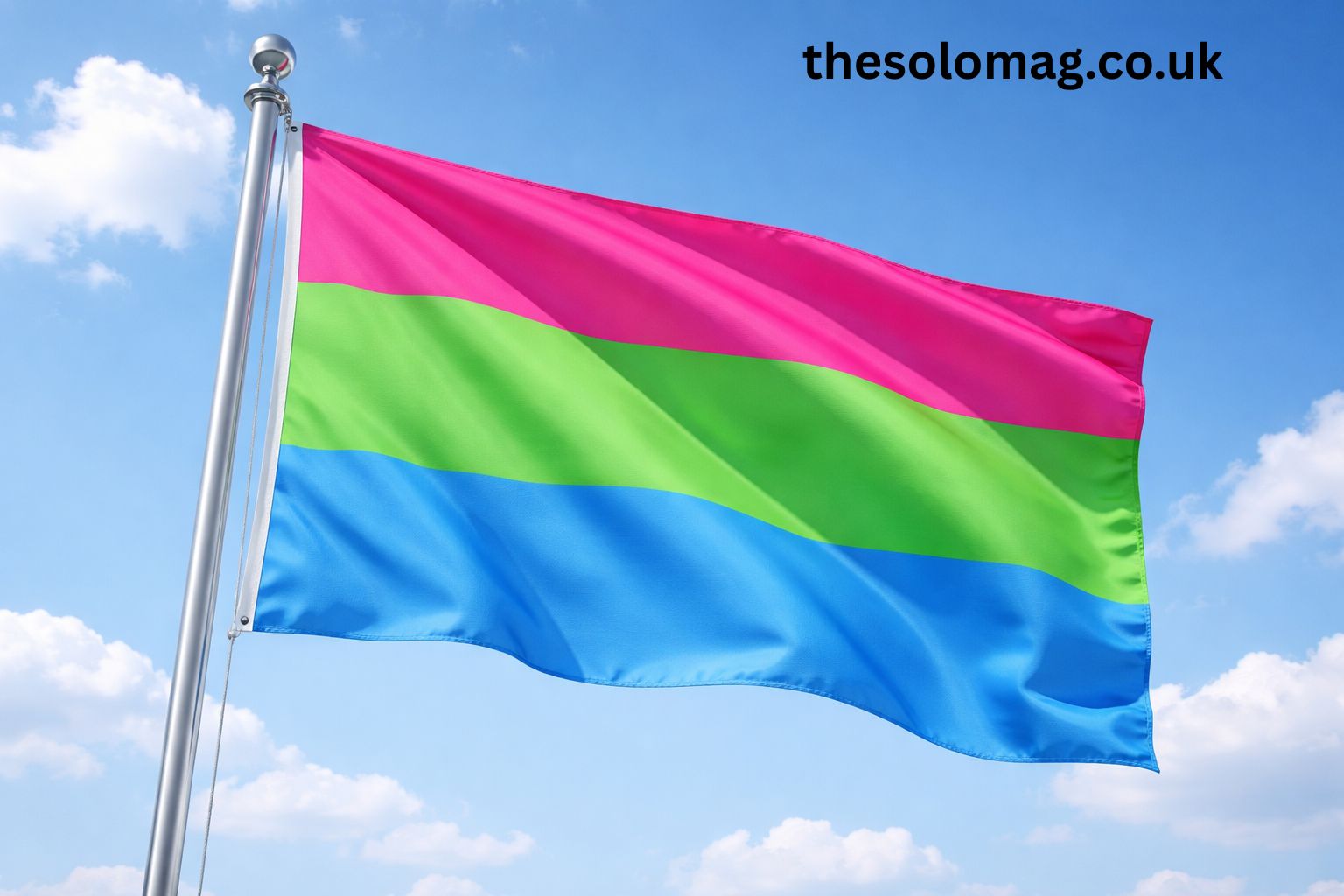
If you have ever opened a dating app or scrolled through LGBTQ+ social media, you have probably seen a series of colored stripes waving in a profile bio. But one specific banner keeps popping up more than ever: the poly flag.
For years, people practicing ethical non-monogamy (ENM) felt invisible. There was no universal symbol to represent loving multiple people honestly. That changed when community artists designed flags to wave at Pride parades, on front porches, and even inside virtual meeting rooms.
But what does it actually look like? Does it have an official design? And why do some versions have a pi symbol while others do not?
Let’s break down everything you need to know—from color meanings to the controversy behind the “new poly flag.”
What Is the Poly Flag? (A Quick Definition)
It is a symbol of pride, visibility, and solidarity for polyamorous individuals. Polyamory means engaging in multiple loving, consensual relationships at the same time.
The flag serves three main purposes:
- Visibility – Helping poly people recognize each other.
- Education – Teaching outsiders that polyamory is not cheating.
- Community – Creating a shared identity.
Unlike a national flag, there is no single “official” version. However, two designs dominate the conversation: the original 1995 poly pride flag and the newer 2022 redesign.
Related: Polyamory vs. Open Relationship – Key Differences Explained
Is There a Poly Flag? Yes – Actually, Two Main Versions
A common Google search is: is there a poly flag? The answer is yes, but with a twist.
1. The Original Poly Pride Flag (1995)
Created by Jim Evans, this design features three horizontal stripes:
- Blue – Openness and honesty.
- Red – Love and passion.
- Black – Solidarity with those who must hide their polyamory.
In the center, a gold Greek letter Pi (π) represents the infinite possibilities of love.
2. The New Poly Flag (2022 Redesign)
Many younger poly advocates felt the original flag was visually harsh. The new poly flag replaces the dark black stripe with a softer purple and removes the Pi symbol for a cleaner, more modern look.
The new poly flag colors are:
- Deep blue – Honesty.
- Magenta red – Passion.
- Purple – Community and solidarity.
- Yellow – Energy and agency.
Today, you will see both versions online. The new poly flag is gaining ground on TikTok, Instagram, and at 2026 Pride events.
Poly Flag Colors: What Does Each Stripe Mean?
Let’s dive deeper into the poly flag colors because each hue carries emotional weight.
Original Flag (Jim Evans)
| Stripe | Meaning |
|---|---|
| Blue | Open communication |
| Red | Romantic love |
| Black | Those forced into secrecy |
| Gold Pi | Infinite choices in love |
New Poly Flag (2022 Redesign)
| Stripe | Meaning |
|---|---|
| Blue | Trust and transparency |
| Magenta | Desire and passion |
| Purple | Solidarity across identities |
| Yellow | Personal agency and autonomy |
Notice that the new poly flag removes black to avoid associations with mourning or anarchy. Purple replaces black to emphasize belonging.
Real-life example: Imagine a freelancer working from a coffee shop. They wear a small poly flag pin on their laptop bag. A client notices and privately shares that they are also polyamorous. That small piece of fabric created a safe connection.
Why Was the Poly Flag Redesigned? (Controversy Explained)
No community agrees on everything, and polyamory is no exception.
Critics of the original poly flag pointed out two issues:
-
The Pi symbol – It is mathematically precise but felt cold and academic.
-
The black stripe – Some felt it symbolized shame or hiding, not pride.
In response, the new poly flag emerged in 2022. It spread quickly through Reddit, Discord, and Polyamory Facebook groups. By 2024, major Pride organizations began stocking the new design.
However, many older poly activists still fly the original. Both remain valid. When someone asks what does the poly flag look like?, you can honestly answer: “It depends on who you ask.”
What Does the Poly Flag Mean for Daily Life?
Symbols matter most when they enter real-world situations.
Consider a small business owner who runs a therapy practice. They specialize in ENM-friendly counseling. Hanging a poly flag in their waiting room signals safety before a single word is spoken.
Or think of a college student decorating their dorm room. They are not “out” as poly to their parents yet. But a small poly pride flag sticker on their laptop is a quiet beacon to like-minded peers.
The flag is not just decoration. It is a tool for:
- Reducing isolation – Knowing you are not broken.
- Starting conversations – “Hey, I see your flag.”
- Building community – Finding local poly meetups.
Poly Flags in Pop Culture (2026 Update)
By 2026, It have appeared in surprising places:
- A background prop on an HBO dating show.
- Emojis in Slack channels at tech companies.
- Temporary tattoos handed out at music festivals.
Even major retailers now sell garden flags, desk flags, and enamel pins. Search “poly flag” on Etsy, and you will find over 2,000 handmade results.
This mainstream visibility has a double edge. Some poly veterans worry about commercialization. Others celebrate that their love is no longer invisible.
Related: Ethical Non-Monogamy Terms Everyone Should Know
How to Display it Respectfully
If you are new to polyamory, you might wonder about flag etiquette.
Here are four simple guidelines:
-
No modification – Do not change the stripe order or colors unless you are creating personal art.
-
Context matters – Flying the flag at work? Know your local laws and company policies.
-
Pair with pronouns – Many poly people also display pronoun pins to reduce assumptions.
-
Educate gently – When someone asks “what is that flag?”, answer with patience, not frustration.
You do not need permission to fly a poly pride flag. It is an organic community symbol, not a trademarked logo.
What Does the Poly Flag Look Like? Visual Description for SEO
For anyone landing on this article via voice search or text-only browser, here is a clear description:
The new poly flag is a horizontal rectangle with four equal stripes. From top to bottom: blue, magenta, purple, and yellow. No emblems or letters appear on the flag.
The original poly flag has blue, red, and black stripes with a gold Pi symbol in the center.
Both flags use a 2:3 or 1:2 aspect ratio, similar to most national flags.
If you need a mental image: think of a sunset over the ocean, but with purple in the middle instead of orange.
Poly Flag vs. Other LGBTQ+ Flags (Don’t Confuse Them)
Newcomers sometimes mistake the poly flag for other pride flags.
| Flag | Colors | Community |
|---|---|---|
| Poly flag (new) | Blue, magenta, purple, yellow | Polyamory |
| Pansexual flag | Pink, yellow, blue | Pansexuality |
| Aromantic flag | Green, white, gray, black | Aromanticism |
| Genderfluid flag | Pink, white, purple, black, blue | Gender identity |
The easiest way to remember: It always has a warm magenta or red stripe near the top, followed by purple.
If you see a Pi symbol, it is the original poly pride flag. If you see four stripes with no symbol, it is the new poly flag.
FAQs
Q:1 What does it represent?
It represents polyamory—the practice of loving multiple people ethically and consensually.
Q:2 Is there an official poly flag?
No. The two most recognized versions are the 1995 Jim Evans flag and the 2022 redesign.
Q:3 What do its colors mean?
In the new design: blue = honesty, magenta = passion, purple = community, yellow = autonomy.
Q:4 Why does the original poly flag have a Pi symbol?
Pi (π) stands for “infinite possibilities” in love and relationships.
Q:5 Is the poly flag part of the LGBTQ+ family?
Yes. Many poly people identify as LGBTQ+, but polyamory itself is a relationship structure, not a sexual orientation.
Q:6 What does it look like compared to the pan flag?
It is pink, yellow, blue. The new poly flag is blue, magenta, purple, yellow—purple replaces pink.
Q:7 Can a monogamous person fly the poly flag?
Technically yes, but it would be misleading. Allies usually wear a “Poly Ally” pin instead.
Q:8 Where can I buy it?
Etsy, Amazon, and specialty LGBTQ+ stores. Look for double-stitched polyester for outdoor use.
Q:9 Why was the black stripe removed from it?
Some felt black represented shame or hiding. Purple is more inclusive and uplifting.
Q:10 Do other ENM groups have their own flags?
Yes. Swinging communities have a different flag (red, white, blue) and relationship anarchy has a tricolor flag.
Q:11 How do I explain it to my family?
Start simple: “It’s a flag for people who believe you can love more than one person honestly, like loving multiple children or friends.”
Q:12 Is it copyrighted?
No. Both designs are open for community use.
Q:13 What is the future of it?
By 2026, the new poly flag is slowly becoming the default, but both will likely coexist for years.
Conclusion: One Flag, Many Loves
It is more than colored fabric. It is a quiet signal that says, “You are not alone.” Whether you prefer the original Pi symbol or the sleek new poly flag, both serve the same purpose: visibility for ethical non-monogamy.
If you are polyamorous, flying the flag—even as a tiny enamel pin—can change how you move through the world. If you are monogamous, recognizing the poly pride flag helps you become a better ally.
Love is not a finite resource. And now, it has a banner.
FOR FURTHER INFORMATION, VISIT: THESOLOMAG