 By Admin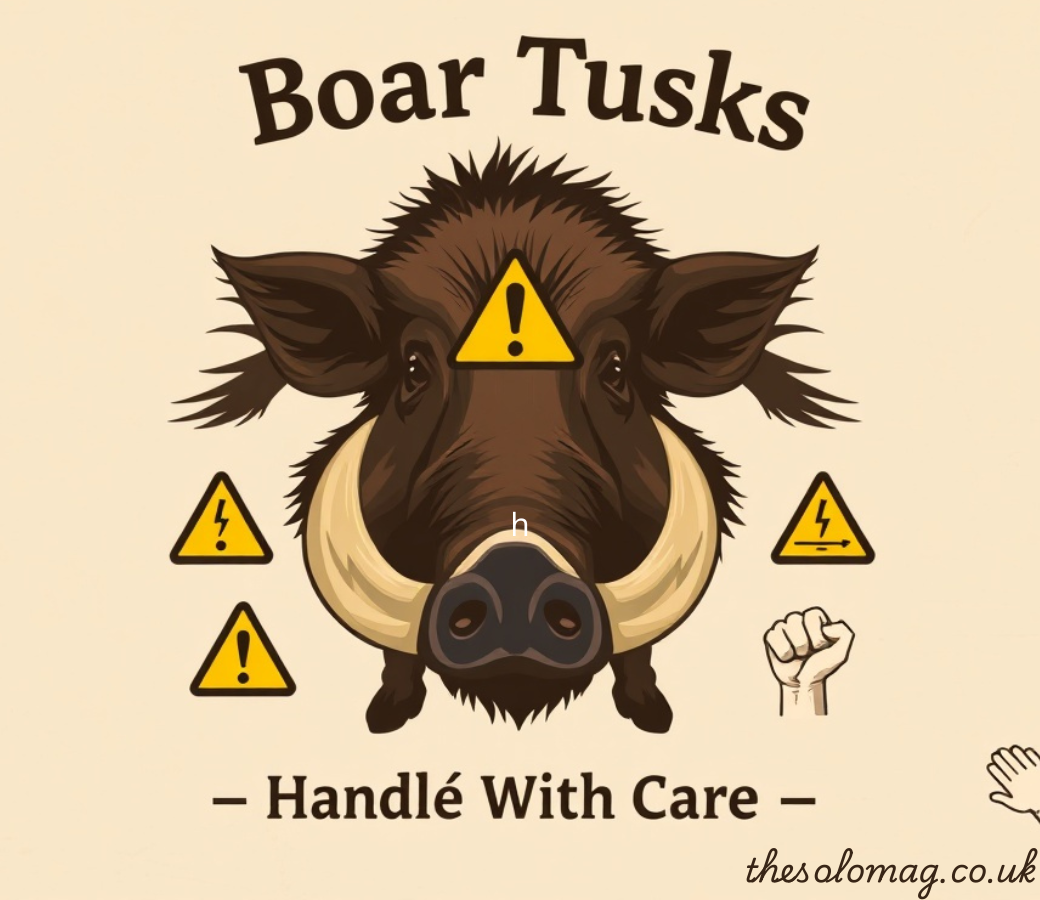
If you have ever seen a wild boar up close, the first thing you likely noticed was its impressive tusks. These curved, razor-sharp weapons are the boar’s primary defense and a coveted trophy for hunters.
But boar tusks aren’t just for show. They serve critical biological functions and have become highly sought after for crafting custom knives, jewelry, and art pieces. In this guide, we’ll explore the science, uses, and safety concerns surrounding wild it .
What Are Boar Tusks? (Anatomy Explained)
Contrary to popular belief,it are not horns or antlers. They are ever-growing canine teeth made of dentin and enamel—just like your own teeth, but far more robust.
A wild boar has four tusks in total:
-
Two upper tusks (whettings or grinders): These grow upward and outward.
-
Two lower tusks (cutters): These are shorter but incredibly sharp.
Here’s the key: The lower tusks constantly rub against the upper tusks. This friction creates a self-sharpening mechanism, keeping the edges lethally honed at all times.
How Big Do Boar Tusks Get?
Tusk size depends heavily on age, genetics, and subspecies. On average:
| Boar Type | Average Tusk Length (Lower) | Record Length |
|---|---|---|
| European Wild Boar | 4–6 inches (10–15 cm) | ~9 inches (23 cm) |
| Feral Hog (USA) | 3–5 inches (7.5–12.7 cm) | ~7 inches (18 cm) |
| Giant Forest Hog (Africa) | Up to 14 inches (36 cm) | N/A |
Important: Only male boars (boars) develop large, visible tusks. Sows have very small tusks that rarely protrude beyond the lip.
The 3 Main Functions of Boar Tusks
1. Defense Against Predators
When cornered, a boar will slash sideways with its head. Those lower tusks can disembowel a predator—or a careless hunter—in one swift motion.
2. Establishing Dominance
During mating season, males fight by pressing heads together and slashing at each other’s shoulders. The boar with the longer, sharper tusks usually wins.
3. Rooting for Food
Boars use their tusks and snouts to dig up roots, tubers, and grubs. While the snout does most of the work, tusks help break tough soil.
Why Are Boar Tusks So Valuable?
Beyond hunting trophies, it have real market value.
For Knife Handles
Because it are dense and take a high polish, knife makers use them for custom handles. A single large tusk can sell for 20–50 untreated, or $100+ when crafted into a finished knife.
For Jewelry & Pendants
Polished it are worn as necklaces in many cultures. In some European traditions, a boar tusk pendant is believed to bring courage and protection.
For Taxidermy & Art
Complete skulls with intact tusks are prized by collectors. A European mount (skull plate with tusks) can retail for 75–150.
Safety Alert: The Hidden Danger of Tusks (Must Read for Hunters)
This cannot be overstated: it are biological weapons.
Even after death, a boar’s jaw muscles can tense, causing the tusks to snap shut or slash. Never handle a dead boar by the tusks without proper tools.
Critical Safety Tips:
-
Always wear cut-resistant gloves when handling a carcass.
-
Use a gambrel or hoist – keep the head secured and away from your body.
-
Cut the jaw hinges to relax the bite reflex before sawing tusks.
-
Watch for brucellosis – blood on tusks can transmit diseases to human skin.
Pro tip: When removing tusks for a mount, always cut behind the tusk’s base. Never pull or twist—the root extends deep into the jawbone.
How to Clean and Preserve Boar Tusks (Step-by-Step)
Preserving tusks is easy if you follow these steps:
-
Remove the tusk from the jaw using a bone saw.
-
Boil (carefully): Simmer in water for 1–2 hours to loosen tissue. Do not overboil—it can crack the enamel.
-
Scrape off pulp and meat using a wooden stick or dull knife.
-
Degrease: Soak in acetone or dish soap + water for 24 hours. (Skip this step, and the tusk will yellow and smell in 6 months.)
-
Dry slowly at room temperature for 1 week.
-
Buff with fine steel wool and apply a thin coat of mineral oil for shine.
Are Boar Tusks Illegal to Own?
In most countries (USA, Canada, UK, EU), it is 100% legal to own, sell, or buy it , provided the boar was legally harvested.
Exceptions:
-
Some US states restrict the sale of raw wildlife parts without a fur dealer license (check local laws).
CITES regulations do not apply to wild boar, but they do apply to peccary (a similar but protected animal).
FAQS
1. Are boar tusks dangerous to humans?
Yes, extremely. A live boar can slash with enough force to sever arteries or disembowel a person. Even a dead boar’s jaw can clamp down reflexively, causing serious cuts. Never approach a wounded boar, and always wear cut-resistant gloves when handling a carcass.
2. How can you tell a boar’s age by its tusks?
Young boars (under 2 years) have small, sharp tusks less than 2 inches long. By age 3–4, lower tusks reach 3–4 inches and start curving. Older boars (5+ years) develop thick, heavily curved tusks with worn tips. However, tusk size also depends on genetics and diet.
3. Do boar tusks keep growing throughout their life?
Yes. Unlike human teeth, it grow continuously (about 1–2 mm per month). Constant grinding against the upper tusks keeps them sharp. If a boar loses an opposing tusk, the remaining one can overgrow into a dangerous, corkscrew-like shape.
4. Can you sell boar tusks legally?
In most regions (USA, Canada, EU), yes—provided the boar was legally harvested. However, some US states require a fur dealer license to sell raw wildlife parts. Never sell tusks from endangered peccary species or claim they are “elephant ivory,” which is illegal to trade.
5. What is the difference between a boar tusk and a warthog tusk?
Warthog tusks are longer (up to 24 inches) and have a different growth pattern. Boar tusks curve sharply upward, while warthog tusks form a wider, more open curve. Also, warthogs have four distinct tusks visible at once, while boars primarily show the two lower ones.
6. How much are boar tusks worth in dollars?
-
Raw, unprocessed tusk: 5–20 (small) to 30–50 (large, over 6 inches)
-
Polished pair for knife handle: 40–100
-
Finished custom knife with tusk handle: 150–400
-
Complete boar skull with intact tusks: 75–200
Prices are higher for symmetrical pairs or tusks from European wild boars.
7. Can you use boar tusks for dog chews?
Absolutely not. it are harder than bone and can fracture a dog’s teeth. The sharp edges can also cut a dog’s mouth, throat, or intestines if swallowed. If you want a natural chew, use boiled, un-tusked boar bones instead.
8. How do you remove boar tusks without breaking them?
-
Cut through the jawbone behind the tusk socket using a bone saw or reciprocating saw with a demo blade.
-
Boil the jaw section for 1–2 hours to loosen tissue.
-
Never pull or twist—the root is long and curved. Instead, push from the root side through the socket.
-
For stubborn tusks, freeze the jaw overnight, then thaw slightly (the contraction helps release the tooth).
9. Do feral hogs in the US have tusks like wild boars?
Yes—feral hogs in North America are descendants of domestic pigs and Eurasian wild boars. Most mature males (barrows) develop tusks identical to European wild boars, though often slightly smaller. Large feral hog tusks over 5 inches are common in Texas and Florida.
10. Why do boar tusks sometimes turn yellow or crack?
Improper drying. After removal, tusks contain fats and moisture. Without degreasing (acetone or dish soap soak for 24 hours), the fats oxidize, causing yellowing and a rancid smell. Cracking happens when tusks dry too fast (e.g., in an oven or direct sun). Always dry slowly at room temperature.
FOR FURTHER INFORMATION,VISIT: THESOLOMAG.CO.UK