 By Admin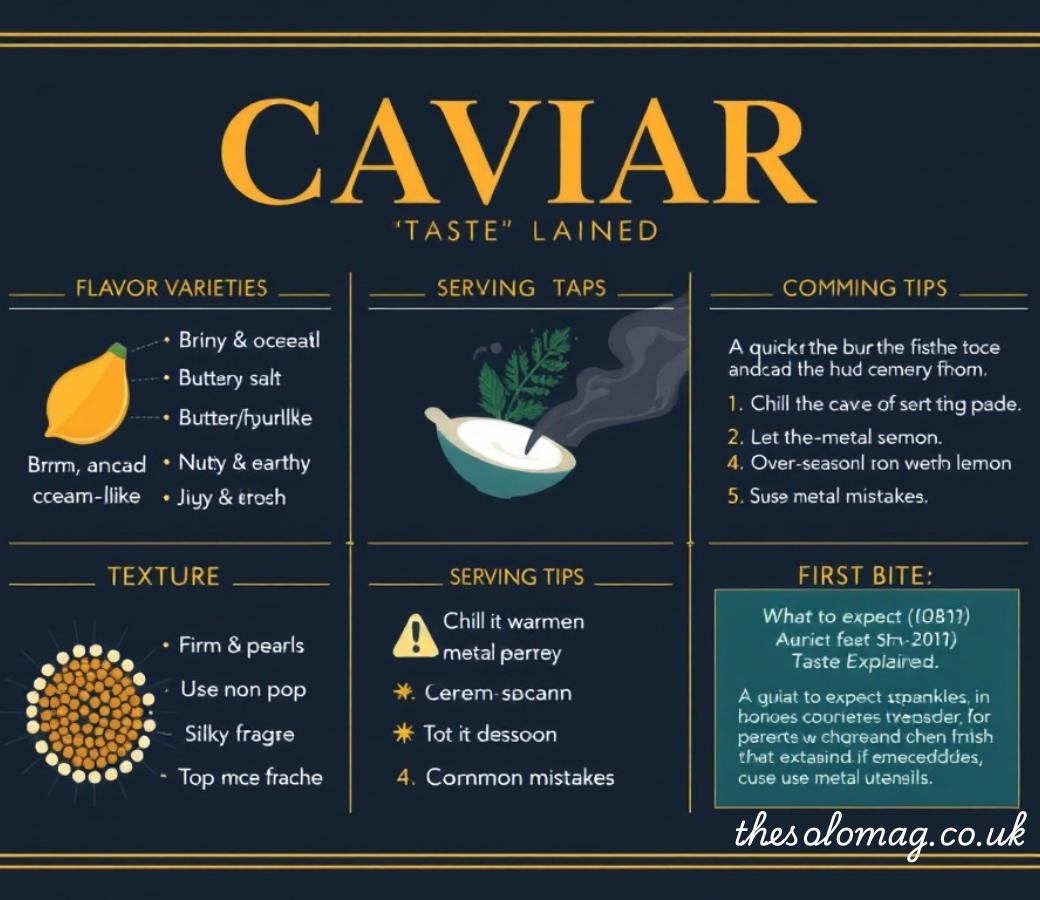
The Short Answer: What Caviar Tastes Like
Quality caviar delivers a clean, briny taste reminiscent of ocean air rather than fishiness, followed by subtle buttery richness that coats the palate. The finish can range from nutty to creamy to mineral, depending on the variety .
Most importantly, fresh sturgeon caviar has a delicate, refined salinity – think the difference between cheap table salt and high-quality sea salt. Both are salty, but one offers complexity while the other just tastes harsh .
Good caviar does NOT taste like: fish, mud, metal, or sour notes. If it does, it’s either low-quality product or past its prime .
The Flavor Profile: What to Expect in Three Stages
When you place quality caviar on your tongue, the experience unfolds in distinct layers:
Stage 1: The Initial Brine
The first thing you’ll notice is a light, clean saltiness – like tasting the ocean breeze rather than the ocean itself. This isn’t harsh or overpowering. Instead, it’s a gentle introduction that prepares your palate for what follows .
Stage 2: The Buttery Mid-Palate
As the eggs rest on your tongue, a smooth, creamy richness emerges. This buttery quality is what separates exceptional caviar from average roe. Some varieties add nutty undertones (especially Osetra), while others lean toward pure creaminess (Beluga and Kaluga) .
Stage 3: The Clean Finish
After the pop and release, quality caviar leaves a clean, lingering finish that can range from subtly nutty to purely mineral. There should be no heavy aftertaste, no oiliness, no lingering fishiness .
The Texture Component: Half the Experience
Flavor tells only half the story. With caviar, texture defines the experience as much as taste does .
Quality eggs should be:
-
Firm and distinct – each pearl holds its shape
-
Slightly resistant before popping
-
Fresh and glossy – not mushy or broken
The magic moment is the “pop” – when you press the eggs gently against the roof of your mouth and they release their liquid center, flooding your palate with concentrated flavor .
Mushy, broken, or overly soft eggs indicate poor handling or age. Conversely, eggs that are too hard suggest over-processing. The ideal texture falls precisely between these extremes .
Caviar Varieties: How Taste Differs by Type
Not all caviar tastes the same. Here’s your guide to the major varieties, from most to least intense:
Beluga – The Legend
-
Egg Size: Largest
-
Color: Silver to dark gray
-
Taste: Buttery, delicate, creamy
-
Texture: Silky, almost melt-in-your-mouth
-
Best for: Special occasions (and very deep pockets)
Beluga comes from the largest sturgeon species, which can live over 100 years. True Beluga is rare and expensive – the fish takes up to 25 years to mature. The experience is understated luxury, not aggressive impact. Flavors are subtle and refined rather than bold .
Osetra (also Ossetra) – The Connoisseur’s Choice
-
Egg Size: Medium
-
Color: Golden to brown, sometimes amber
-
Taste: Nutty, briny, complex
-
Texture: Firm, distinct pearls
-
Best for: First-timers and aficionados alike
Many caviar experts consider Osetra the most complex and interesting variety. The flavor varies significantly based on the sturgeon’s diet – some batches develop distinctly walnut-like notes, others trend more toward the sea. Osetra generally offers better value than Beluga while delivering comparable quality .
For beginners: Osetra is often recommended as the ideal starting point because it feels luxurious without being overwhelming .
Kaluga – The Beluga Alternative
-
Egg Size: Large
-
Color: Gray to black
-
Taste: Creamy, buttery, mild
-
Texture: Large, creamy pearls
-
Best for: Those who want Beluga-like experience at lower cost
Often called “river beluga,” Kaluga hybrid caviar has gained popularity as an accessible alternative to Beluga. The flavor profile is smooth, buttery, and approachable – perfect for first-timers who want to understand what the fuss is about .
Sevruga – Bold and Intense
-
Egg Size: Smallest
-
Color: Dark gray to black
-
Taste: Bold, salty, intense
-
Texture: Small, delicate pearls
-
Best for: Experienced palates only
Sevruga comes from the smallest caviar-producing sturgeon and features the smallest eggs – but those small pearls pack concentrated flavor. Expect bolder, more pronounced brininess with earthy undertones .
Warning for beginners: Sevruga’s intensity can be overwhelming. Start elsewhere and return to this once you’ve developed your palate .
Salmon Roe (Ikura) – The Bright Alternative
-
Egg Size: Large
-
Color: Bright orange to red
-
Taste: Sweet, oceanic, briny
-
Texture: Juicy, firm pop
-
Best for: Sushi lovers and those seeking approachable entry point
While not “true caviar” (which comes only from sturgeon), salmon roe deserves mention. It tastes brighter and fruitier than sturgeon caviar, with a bigger, juicier pop. Many people fall in love with caviar through Ikura because it feels playful, familiar, and not intimidating .
Quick Comparison Table
| Type | Taste Profile | Texture | Best For |
|---|---|---|---|
| Beluga | Buttery, delicate, creamy | Silky, melts on tongue | Special occasions |
| Osetra | Nutty, briny, complex | Firm, medium pearls | First-timers & connoisseurs |
| Kaluga | Creamy, buttery, mild | Large, creamy pearls | Beluga-like experience |
| Sevruga | Bold, salty, intense | Small, delicate pearls | Experienced palates |
| Salmon Roe | Sweet, oceanic, briny | Juicy, firm pop | Sushi, approachable entry |
What Affects Caviar Taste: Beyond the Species
Two tins of the same caviar variety can taste remarkably different. Here’s why:
Salt Content and Malossol
The term “malossol” means “little salt” in Russian. Malossol caviar tastes fresher and more delicate than heavily salted versions. Cheaper caviar often uses more salt to extend shelf life and mask inferior egg quality, resulting in a predominantly salty rather than complex taste .
Quality producers use just enough salt to preserve and enhance – typically less than 5% salt – never enough to cover flaws .
Freshness and Storage
Caviar is a living product. Fresh caviar tastes cleaner and more vibrant. Proper storage matters enormously – caviar should remain refrigerated at 28-32°F (colder than standard refrigerator temperature) .
The Sturgeon’s Environment
Wild sturgeon feeding on natural diets produce different-tasting caviar than farm-raised fish. Water quality, temperature, and mineral content all influence egg development. Some producers call this “terroir” – the environmental factors that shape flavor .
How to Taste Caviar Properly
How you taste caviar matters as much as what you taste. Follow these rules for the authentic experience:
Temperature First
Remove caviar from refrigeration 10-15 minutes before serving. This allows the eggs to warm slightly, releasing aromatic compounds that cold temperatures suppress. Traditional service presents caviar on crushed ice to maintain temperature during consumption .
The Right Utensils: No Metal!
Metal spoons can oxidize caviar and impart metallic flavors. This is not snobbery – it’s chemistry. Use instead :
-
Mother-of-pearl (the gold standard)
-
Bone or horn
-
Gold
-
Plastic (in a pinch)
The Tasting Method (Two Options)
Option 1 – The Traditional “Hand Bump”:
Place a small amount of caviar on the back of your hand between thumb and forefinger. This warms the eggs slightly using body heat. Bring to your mouth and let the eggs roll onto your tongue .
Option 2 – From the Spoon:
Take caviar directly from a mother-of-pearl spoon to your mouth.
The Actual Eating Technique
-
Place caviar on your tongue
-
Press gently against the roof of your mouth – don’t chew
-
Let the eggs pop naturally, releasing their liquid center
-
Notice the initial taste, the texture of the pop, and the finish that lingers
Do not chew caviar – this diminishes the taste dramatically .
Best Pairings: What to Serve with Caviar
Purists argue that quality caviar needs no accompaniment. But traditional pairings exist because they genuinely work.
Champagne and Sparkling Wine
The classic pairing. Champagne’s acidity cuts through caviar’s richness, while effervescence cleanses the palate between bites. Choose Brut or Extra Brut styles – residual sugar competes with caviar’s delicate flavors .
Vodka – The Traditional Choice
Russian and Eastern European traditions pair caviar with ice-cold vodka. The neutral spirit cleanses without competing. Serve vodka from the freezer in small glasses meant for sipping, not shooting .
Blinis and Traditional Accompaniments
Small buckwheat pancakes (blinis) provide neutral platforms. Add :
-
A small dollop of crème fraîche
-
Finely chopped hard-boiled egg (white and yolk separately)
-
Maybe a few fresh chive strands
Unexpected Pairings
Modern caviar culture has relaxed considerably. Try it on :
-
Potato chips (seriously)
-
Scrambled eggs
-
Baked potatoes
-
Fried chicken
-
Sushi or pasta
What to AVOID
Never serve caviar with :
-
Raw onion (overwhelms the delicate flavor)
-
Lemon juice (masks quality; primarily covers flaws in inferior product)
-
Strongly flavored bread or crackers
-
Sour cream (too heavy; crème fraîche is the correct choice)
Common Mistakes That Ruin Caviar
Even quality caviar disappoints when handled improperly. Avoid these errors:
-
Serving it too cold – Mutes flavor and texture
-
Using metal utensils – Adds metallic off-flavors
-
Buying cheap imitations – Grocery store “caviar” is often dyed lumpfish or paddlefish roe, which tastes fundamentally different from sturgeon caviar
-
Over-garnishing – If you’re adding lemon and onion, you’re hiding something
-
Freezing caviar – Destroys texture completely
Why Is Caviar Still Considered a Delicacy?
Given its subtle flavor profile, why all the fuss?
Caviar’s appeal has never been about loud flavors. It comes from :
-
Rarity – True sturgeon caviar takes years to produce (sometimes decades)
-
Skill – Requires expert harvesting and precise curing
-
History – Associated with tsars, royalty, and celebration for centuries
-
The ritual – Serving over ice, using mother-of-pearl spoons, the careful tasting process
You enjoy caviar the same way you enjoy any delicate luxury – by paying attention to the small details. The smooth texture, the clean finish, the soft pop. Those quiet layers are what keep caviar firmly in the world of delicacies .
Is Caviar Accessible to First-Timers?
Absolutely – more than ever before.
More than 80% of global premium caviar now comes from sustainable farms, making it more accessible and affordable than in the wild-catching era . Brands like Cavi offer Kaluga Hybrid for $89 per 30g – still a splurge, but not the “second mortgage” territory of wild Beluga .
For beginners, start with Osetra or Kaluga – they’re balanced, approachable, and won’t overwhelm your palate .
Final Verdict: What Does Caviar Taste Like?
For first-time eaters, caviar is less about shock and more about gentle surprise. The flavor is:
-
Salty in a soft, refined way
-
Creamy and sometimes nutty
-
Clean enough to stay in memory without lingering on your tongue
The texture – that soft pop and release – is what most people remember longest.
The right caviar, served simply and at the proper temperature, reveals its charm slowly and elegantly. It feels like a small luxury that unfolds one bite at a time. And that, perhaps, is why people keep returning to it – bite after briny, buttery, beautiful bite.
FAQS
1. Does caviar taste fishy?
Answer: No. High-quality caviar does not taste fishy. It tastes clean, briny, and reminiscent of ocean air rather than fish. If caviar tastes fishy, it’s either low-quality, past its prime, or improperly stored. Cheap imitation caviars (like lumpfish or dyed cod roe) often have a fishy taste that real sturgeon caviar lacks.
2. What does caviar taste like for the first time?
Answer: For first-timers, caviar tastes mildly salty, buttery, and surprisingly delicate. Most people expect an intense fish flavor and are shocked by how subtle it is. The texture (the gentle “pop” of the eggs) is often more memorable than the taste itself. Think ocean breeze, not ocean fish.
3. Why is caviar so expensive if it tastes mild?
Answer: Caviar’s price comes from rarity, time, and skill, not bold flavor. Sturgeon take 8–25+ years to mature before producing harvestable eggs. The harvesting and salting process requires expert hands. You’re paying for decades of waiting, centuries of tradition, and the luxury experience — not an overpowering taste.
4. Should you chew or swallow caviar?
Answer: Do not chew caviar. Place the eggs on your tongue and press them gently against the roof of your mouth. Let them pop naturally, releasing their liquid center. Chewing diminishes the delicate flavor and ruins the textural experience.
5. What is the best tasting caviar for beginners?
Answer: Osetra (Ossetra) or Kaluga are best for beginners. Osetra offers nutty, briny, complex flavors that aren’t overwhelming. Kaluga provides a creamy, buttery, mild profile similar to Beluga but at a lower price point. Avoid Sevruga as a first try — its bold intensity can be off-putting to new palates.
6. Does caviar taste better with or without accompaniments?
Answer: Purists say without. Quality caviar should be tasted alone first — over ice, with a mother-of-pearl spoon. However, traditional pairings like blinis, crème fraîche, and Champagne enhance the experience without masking flavor. Avoid raw onion, lemon, or sour cream — these cover up good caviar and are used only for low-quality roe.
7. What does bad caviar taste like?
Answer: Bad caviar tastes sour, metallic, overly fishy, or muddy. Texture will be mushy, broken, or overly sticky. A strong ammonia or chemical smell is a definite sign of spoilage. Fresh, quality caviar should smell like the ocean — clean and mild, never sharp or offensive.
8. Why can’t you use a metal spoon with caviar?
Answer: Metal spoons oxidize caviar and impart a metallic taste. This isn’t snobbery — it’s chemistry. Always use mother-of-pearl, bone, horn, gold, or plastic spoons. Most caviar tins come with a small mother-of-pearl spoon for this exact reason.
9. How can you tell if caviar is good quality by taste?
Answer: Good caviar has three characteristics clean, mild brine (not harsh salt), buttery or nutty mid-palate, and clean finish with no lingering oiliness or fishiness. Each egg should be firm, intact, and pop cleanly. Mushy eggs or a harsh salty taste indicate low quality.
10. Does red caviar (salmon roe) taste different from black caviar?
Answer: Yes, significantly. Salmon roe (ikura) tastes brighter, sweeter, and fruitier with a larger, juicier pop. Black sturgeon caviar is more delicate, buttery, and refined. Salmon roe is often described as “fun and approachable” while black caviar is “elegant and subtle.” Both are delicious — just different.
FOR FURTHER INFORMATION,VISIT: THESOLOMAG.CO.UK