 By Admin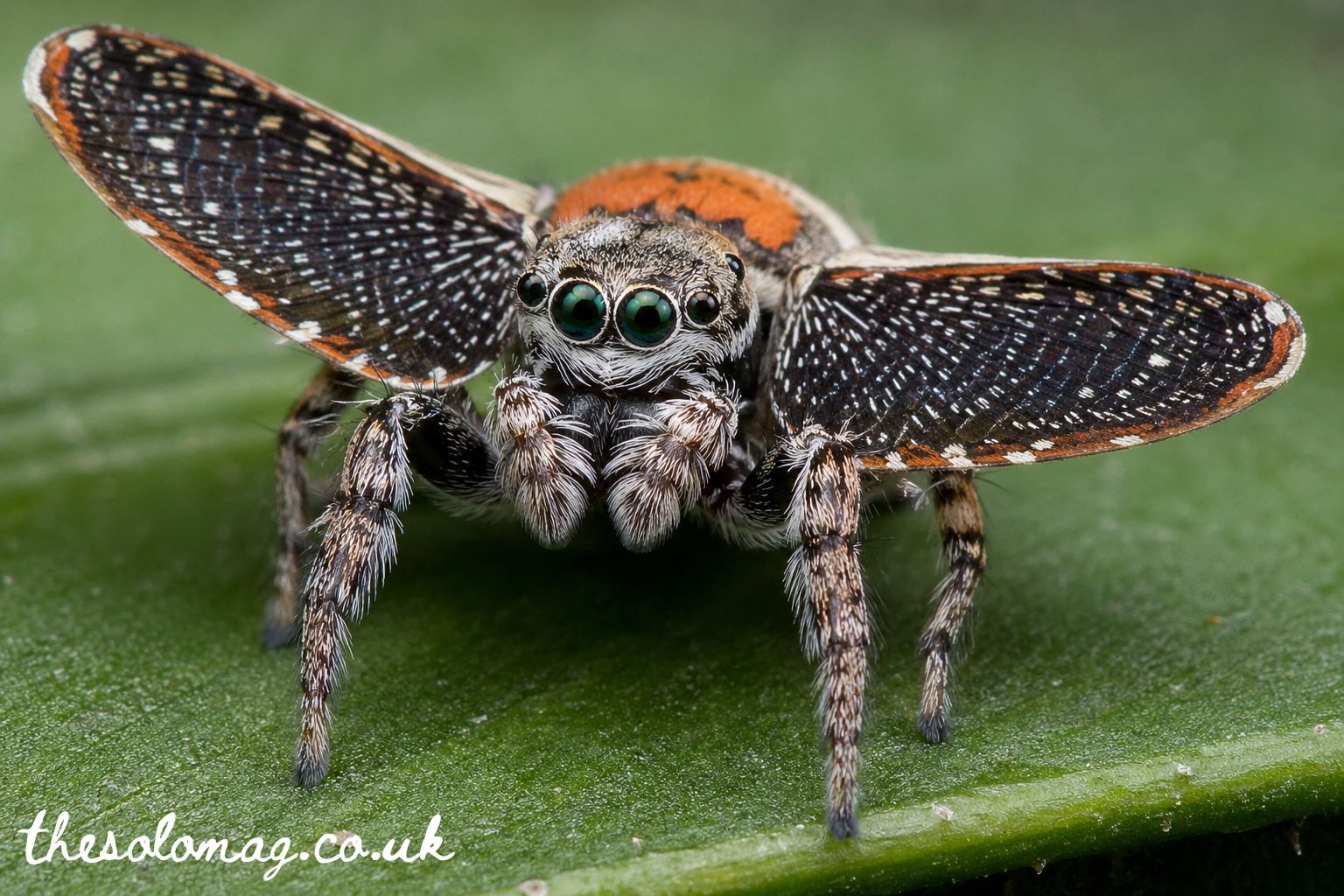
When you hear the name Attus volans, you might imagine a terrifying, winged arachnid swooping down from the trees. But the reality is far more charming and fascinating than any nightmare.
The truth is, Attus volans doesn’t actually fly. Instead, this tiny marvel is better known today as Maratus volans, or the Peacock Spider. Despite its name suggesting flight, this creature is famous for something much more entertaining: a dazzling dance routine.
Living up to its “volans” (Latin for “flying”) namesake, this spider was once believed to glide through the air using its vibrant flaps. But as any spider enthusiast will tell you, the Attus volans is actually a master of jump scares and courtship, not aviation. Today, we are diving deep into the web of this incredible Australian native.
What is Attus Volans? A Taxonomic Mystery
If you search for Attus volans Wikipedia references, you might find yourself tangled in a historical web. The naming of this creature is a journey through taxonomic history.
Initially, when naturalists first described this peacock spider, they classified it under the Attus genus. Attus was historically a “wastebasket taxon” used for many jumping spiders in the 19th century. Later, the species was moved to Saitis, and finally, it landed in its current home: Maratus volans.
Why “Volans” If It Can’t Fly?
This is the most common point of confusion regarding the Attus volans. Volans translates to “flying” in Latin. Early observers noted the spider’s ability to leap great distances (relative to its size) and flash vibrant abdominal flaps. In a way, it “flies” through the air during its leaps, but technically, it is a gliding jumper, not a flyer. They expand their limbs hydraulically, using changes in blood pressure to launch themselves with incredible force.
So, when we talk about Attus volans, we are talking about the historical ghost of what we now call the Peacock Spider.
The Real-Life “Fly” Dance: Mating Rituals
If you watch an Attus volans video, you won’t see wings flapping. You will see a spectacle that looks like a tiny, eight-legged disco. The males are the superstars of the spider world.
To attract a female (who is often larger and potentially cannibalistic), the male performs an intricate routine:
-
The Fan: He raises his abdomen vertically, expanding flat, colorful flaps like a peacock’s tail.
-
The Dance: He raises his third pair of legs, which are tipped with black bristles, waving them rhythmically.
-
The Swagger: They move side to side, vibrating their bodies to catch the light reflecting off their iridescent scales.
Where to Find the Flying Peacock Spider
Are you planning a trip down under to spot an Attus volans? You will need to look closely—very closely. These spiders are tiny, usually measuring only 4 to 5 millimeters in length (about the size of a grain of rice).
They are endemic to specific regions of Australia, primarily:
-
Queensland
-
New South Wales
They prefer heathland and coastal dunes, though they are sometimes found in dry shrublands.
Related: Looking for more tiny wonders? Check out our guide on the “Bold Jumping Spider” (Phidippus audax) found in North America.
Applying the “Attus Volans” Mindset to Daily Life
Why should a freelancer or small business owner care about a spider? Because the Attus volans teaches us a powerful lesson in marketing and risk-taking.
Imagine you are a small business owner trying to stand out in a crowded market (like the male peacock spider trying to stand out against a background of dirt and leaves). You cannot play it safe.
-
Visual Appeal: Just as the spider uses bright colors, you need a visual hook. Whether it’s branding or a website, don’t be grey.
-
The Pitch: The spider doesn’t just stand there; it dances. Your product pitch needs movement and energy.
-
The Risk: The male spider risks being eaten every time he approaches a female. In business, you have to take calculated risks to win big contracts.
Just like the Attus volans uses its “wings” to make an impression, you should use your unique selling points to stand out.
FAQs
Here are 13 of the most common questions about the Attus volans and their relatives, answered in plain English.
Q:1 Does Attus volans actually fly?
No. It leaps or glides. Volans means “flying” in Latin, but the name is a historical misnomer based on its gliding leaps and large, wing-like flaps.
Q:2 Is Attus volans the same as Maratus volans?
Yes. Attus volans is the original scientific name given to this species. It was later reclassified to Maratus volans, the name used by scientists today.
Q:3 Are Peacock Spiders dangerous to humans?
Not at all. They are too small to break human skin effectively with their fangs, and their venom is mild. They are very shy.
Q:4 Where can I watch an Attus volans video?
You can find incredible macro videos on YouTube by searching for “Peacock Spider Dancing.” The visual quality is stunning and viral-worthy.
Q:5 How big is an Attus volans?
Very small. Adults usually max out at about 5 mm in body length. You could fit several on your fingernail.
Q:6 Why do they raise their legs when dancing?
The third pair of legs acts as a visual signal or a “flag” to attract the female’s attention and display fitness. They are often tipped with white or black brushes.
Q:7 Can I keep an Attus volans as a pet?
While jumping spiders are popular pets, Maratus volans is rare and specific to Australia. Export laws are strict, and they require specific humidity and live food.
Q:8 What does “volans” mean?
It is the Latin word for “flying” or “winged.”
Q:9 Are there Attus volans in the United States?
No. The species is native only to Australia. However, the US has many cousins in the Salticidae family, like the Phidippus audax.
Q:10 What do they eat?
They are voracious predators of small insects and flies—much smaller than themselves. They hunt aggressively like tiny tigers.
Q:11 Is the Attus volans endangered?
Current conservation status is generally stable, but specific data is limited due to their small size and elusive nature.
Q:12 Do female Attus volans have bright colors?
No. Females are usually cryptically colored (brown or tan) to hide from predators while raising young. Only the males have the “peacock” colors.
Q:13 How high can a jumping spider jump?
Most jumping spiders, including the Attus volans, can jump up to 50 times their own body length using a hydraulic burst of blood pressure to their legs.
Pros and Cons: The Peacock Spider as a Pet
While the specific Attus volans is hard to find, other jumping spiders make great pets. Here are the general pros and cons for keepers.
| Pros of Keeping Jumping Spiders | Cons of Keeping Jumping Spiders |
|---|---|
| High Intelligence: They are curious and will watch you back. | Short Lifespan: They often live less than one year. |
| Low Maintenance: No need for heat lamps or massive tanks. | Small Size: Can easily escape through tiny gaps. |
| No Webbing Mess: They don’t build messy webs to clean up. | Specialized Diet: Requires live food (fruit flies/pinheads). |
| Safe for Kids: Venom is negligible; they rarely bite. | Short Lifespan: They often live less than one year. |
Conclusion: Embrace Your Inner Attus Volans
The Attus volans is proof that big things come in small packages. From a misunderstood name to one of the most elaborate courtship rituals on the planet, this spider captures our imagination because it is full of contradictions.
Whether you are a nature lover watching an Attus volans video for the first time, or a business owner learning to “dance” to stand out, this tiny Australian peacock spider has something to teach us. It shows us that you don’t need wings to fly—sometimes, you just need a great pair of legs and a lot of confidence.
FOR FURTHER INFORMATION, VISIT: THESOLOMAG