 By Admin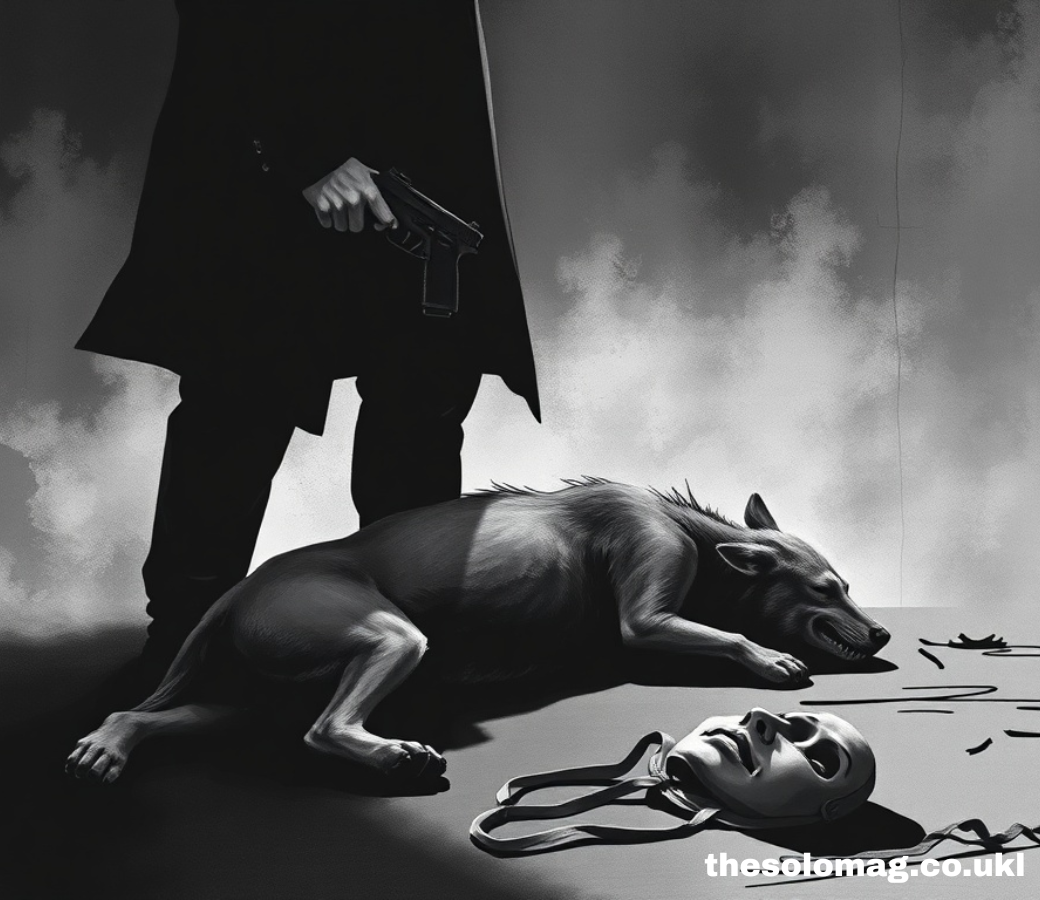
When readers remember Of carlson in mice of men, they think of George and Lennie’s tragic friendship, Curley’s anger, or Candy’s lost hand. But lurking in the background—yet driving the novel’s most brutal moments—is Carlson.
On the surface, carlson in mice of men is just a ranch hand: a powerful, practical man who complains about the smell of Candy’s dog. But peel back the layers, and Carlson becomes Steinbeck’s sharpest critique of unchecked pragmatism. He isn’t evil. He isn’t cruel for fun. That is precisely what makes him terrifying.
In this post, we’ll break down Carlson’s role, his famous dialogue, and why his final line in the book is a masterpiece of dramatic irony.
Who Is carlson in mice of men? (Character Snapshot)
Carlson is a laborer on the Tyler Ranch in Soledad, California. Here is what Steinbeck tells us directly:
-
Physicality: A “powerful, big-stomached man.”
-
Voice: Heavy, deliberate, lacking poetic nuance.
-
Role: The “fixer” – he offers solutions that ignore emotional cost.
-
Key Prop: A Luger pistol (a P08 German semi-automatic pistol), which he is “mighty glad” to own.
Unlike Slim (who has natural dignity) or Crooks (who is broken by isolation), Carlson operates on a simple moral equation: If something is weak, suffering, or useless → kill it.
carlson in mice of menTwo Major Scenes: A Study in Cruel Utility
1. The Shooting of Candy’s Dog carlson in mice of men (Chapter 3)
This is Carlson’s defining moment. Candy’s dog is ancient, blind, toothless, and smells “half an acre.”
Carlson’s argument:
-
The Logical Appeal: “He ain’t no good to himself.”
-
The Hygiene Appeal: “I can’t stand him in here.”
-
The Mercy Appeal: “He wouldn’t feel nothing.”
Slim reluctantly backs Carlson. Candy begs to let the dog die naturally, but Carlson overrides him. He takes the dog outside—and shoots him.
Why this scene matters:
Carlson doesn’t hate the dog. He simply applies ranch logic to a living creature. But Steinbeck forces us to ask: If that logic applies to a dog, who is next?
2. The Hunt for Lennie carlson in mice of men(Chapter 6)
After George kills Lennie, the men rush onto the scene. Curley and the others stare at Lennie’s body. Then, Carlson speaks the most ironic line in American literature:
“Now what the hell do you suppose is eatin’ them two guys?”
Carlson cannot understand why George and Slim look so broken. For Carlson, the situation is clean: Lennie was dangerous → George shot him → problem solved.
He misses the friendship, the guilt, and the loss. Carlson lives in a world without interiority. That is his tragedy—and his menace.
The Luger: More Than a Gun
Let’s talk about the Luger pistol. Carlson obsesses over it. He cleans it. He brags about it. And ultimately, he goads Candy into letting him use it to kill the dog.
Later, George uses the same Luger to kill Lennie.
Symbolism breakdown:
| Element | Representation |
|---|---|
| The Luger | Unemotional, mechanical “mercy” |
| Carlson’s ownership | Practical man’s solution to pain |
| George using it | Tragedy of good men forced to adopt Carlson’s logic |
Steinbeck is warning us: when a society values efficiency over empathy, men like Carlson arm the tragedies of men like George.
Carlson’s Most Important Quotes (Analyzed)
“He ain’t no good to you, Candy. An’ he ain’t no good to himself.”
This is pure utilitarian ethics. Carlson defines worth by usefulness. There is no space here for love, memory, or loyalty.
“Why’n’t you shoot him, Candy?”
The question is invasive. Carlson cannot fathom emotional attachment. To him, a suffering pet is a maintenance issue.
“I’ll shoot him for you. Then it won’t be you that does it.”
Carlson offers plausible deniability. Sound familiar? This prefigures George accepting the burden of killing Lennie, but without Carlson’s emotional void.
Thematic Connection: Carlson vs. The American Dream
Every character in Of Mice and Men wants something:
-
George & Lennie: a farm.
-
Candy: security.
-
Curley’s wife: attention.
-
Crooks: respect.
Carlson wants nothing. He already has his Luger, his bunk, and his job. He represents the dead end of the American Dream—not poverty, but emotional atrophy.
Steinbeck suggests that the real danger isn’t failure. It’s becoming Carlson: a man who no longer sees the point of hoping, and therefore sees no problem with destroying hope in others.
How to Write About Carlson: Essay Tips
If you’re writing a paper or prepping for a test, here are three strong thesis angles:
-
Carlson as foil to Slim – Both are leaders, but Slim leads with empathy; Carlson leads with logic.
-
The gun as moral thermometer – Who handles the Luger and why? Carlson uses it casually; George uses it tragically.
-
Carlson’s blindness – He never understands why George and Slim are upset. That missing comprehension is Steinbeck’s harshest judgment.
Conclusion: Why Carlson Still Matters
Carlson is not the villain of Of Mice and Men. Curley is mean; Curley’s wife is manipulative; the boss is cold. Carlson is worse—because he is normal.
In every modern workplace, every online debate, every political argument, there is a Carlson: the person who says, “Just get rid of it,” “That’s inefficient,” or “Why are you so emotional?”
Steinbeck’s genius is showing us that cruelty doesn’t require a monster. It only requires a man who has forgotten how to care.
FAQS
1. Does Carlson kill Candy’s dog?
Yes. In Chapter 3, Carlson convinces Candy that his old, suffering dog should be put down. When Candy hesitates, Carlson takes the dog outside and shoots it with his Luger pistol. He claims it’s an act of mercy, but Candy deeply regrets allowing it.
2. Does Carlson know George killed Lennie?
No, he does not. When the men arrive at the scene, Carlson sees Lennie’s body and assumes George is just upset. He never suspects George pulled the trigger. He actually asks, “Now what the hell do you suppose is eatin’ them two guys?” – referring to George and Slim.
3. What does Carlson’s Luger symbolize?
The Luger represents cold, utilitarian violence. Carlson brags about it and uses it to kill Candy’s dog efficiently. Later, George uses the same gun to kill Lennie. The Luger symbolizes how practical, emotionless logic can replace compassion – and how good men are forced to adopt that logic in a cruel world.
4. Is Carlson a villain in Of Mice and Men?
Not a traditional villain. Carlson isn’t malicious like Curley. He doesn’t scheme or bully for pleasure. Instead, he represents dangerous pragmatism – the belief that anything weak or useless should be eliminated. Steinbeck suggests that this mindset is more destructive than outright cruelty because it feels “reasonable.”
5. What is Carlson’s most famous quote?
His most ironic and revealing line is:
“Now what the hell do you suppose is eatin’ them two guys?”
He says this after George kills Lennie. Carlson cannot understand why George and Slim look devastated. The quote proves he has no emotional depth or empathy.
6. Why does Carlson want to shoot the dog?
He gives three reasons:
-
Hygiene: The dog smells up the bunkhouse.
-
Utility: “He ain’t no good to himself” – the dog is blind and toothless.
-
Mercy: He claims shooting the dog is kinder than letting it suffer.
However, his tone makes it clear that his own comfort is the real priority.
7. How does Carlson compare to Slim?
| Slim | Carlson |
|---|---|
| Empathetic and respected | Practical and unfeeling |
| Understands George’s pain | Cannot comprehend emotion |
| Leads through moral authority | Leads through logic and force |
Both are natural leaders, but Slim represents humanity, while Carlson represents efficiency without heart.
8. Does Carlson feel guilty about shooting the dog?
No. He shows zero remorse. After killing the dog, he simply cleans his gun and goes back to his routine. Unlike Candy, who lies in his bunk staring at the wall, Carlson never reflects on the act. This lack of guilt is Steinbeck’s critique of emotional detachment.
9. What does Carlson think of Lennie?
Carlson sees Lennie as a problem to be managed. In Chapter 2, he notes that Lennie is strong but “ain’t bright.” After Lennie kills Curley’s wife, Carlson joins the manhunt without hesitation. He never considers Lennie’s humanity – only the threat he poses.
10. Why is Carlson important to the novel’s theme?
Carlson embodies the failure of the American Dream. While other characters dream of land, friendship, or love, Carlson wants nothing. He is already “successful” by ranch standards – but he is spiritually empty. His presence shows that achieving the dream without empathy is just as tragic as failing to achieve it at all.
FOR FURTHER INFORMATION,VISIT: THESOLOMAG.CO.UK