 By Admin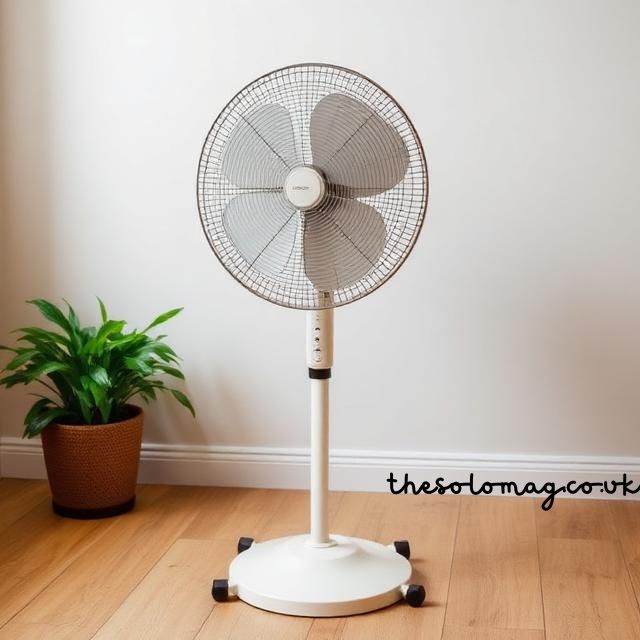
Walk into any home during summer, and you’ll spot it in a corner—a reliable pedestal fan spinning quietly, pushing cool air across a living room or bedroom. In an age of smart air conditioners and bladeless towers, you might wonder if the classic pedestal fan still holds its ground. The short answer? Absolutely.
It offers something many high-tech rivals can’t: simplicity, power, and affordability. Whether you are a freelancer working from a stuffy home office or a parent trying to keep a nursery comfortable, this humble device solves real problems without breaking the bank.
But not all pedestal fans are created equal. From cleaning tricky blades to choosing between a Lasko pedestal fan or a woozoo 360 pedestal fan, this guide covers everything you need. You will learn how to clean pedestal fan components safely, understand what is pedestal fan technology in 2026, and pick the perfect model for your space.
Let’s spin into it.
Table of Contents
ToggleWhat Is a Pedestal Fan? A Clear Definition
It is a freestanding, height-adjustable fan mounted on a long vertical stand with a circular base. Unlike table fans that hog desk space or tower fans that fit into tight corners, it stands tall—usually between three and four feet—and oscillates to distribute air across an entire room.
In essence, a fan on a pedestal gives you flexibility. You can tilt the head up or down, adjust the height from low to high, and move it from room to room thanks to its relatively lightweight build. Many people confuse it with floor fans, but the key difference is the adjustable stand. Floor fans sit directly on the ground; pedestal fans rise above furniture, pushing air over sofas and beds rather than under them.
Related: Tower Fan vs Pedestal Fan: Which Cools Better in 2026?
Why Choose a Pedestal Fan Over AC or Tower Fans?
You might think air conditioning is the ultimate solution. But consider this: running an AC unit for eight hours costs significantly more than running a pedestal fan for the same time. For a small business owner running a food truck or a freelancer working from a garage studio, every dollar counts.
A pedestal fan also offers portability. An AC is permanent. A tower fan is sleek but often harder to clean. A pedestal fan can be moved from the kitchen during breakfast, to the home office by noon, and next to your bed by night—all in under a minute.
Moreover, pedestal fans work beautifully alongside ACs. Set your thermostat a few degrees higher, turn on a pedestal fan, and the moving air makes the room feel four to five degrees cooler. That’s real savings on your energy bill.
Key Features to Look for in a Pedestal Fan (2026 Edition)
Not every pedestal fan delivers the same performance. Here’s what to check before buying:
-
Blade Size: Most pedestal fans range from 12 to 18 inches. Larger blades move more air but can be noisier.
-
Motor Quality: Copper-wound motors last longer than aluminum ones. Look for “pure copper” in specs.
-
Oscillation Range: A good pedestal fan oscillates at least 75 degrees. Some premium models now offer 90-degree sweeps.
-
Speed Settings: Three speeds (low, medium, high) are standard. Four or more give finer control.
-
Remote Control: Essential for bedroom use. Who wants to get up at 2 AM to adjust the fan?
-
Noise Level: Measured in decibels (dB). Under 50 dB is quiet enough for sleep.
Pro Tip: A Lasko pedestal fan often includes a fused safety plug and a wider oscillation range, making it a top choice for families with children or pets.
How to Clean Pedestal Fan Blades Safely (Step-by-Step)
Ask ten people how to clean pedestal fan blades, and you will get ten different answers. But most skip a critical step: unplugging the unit. Dust buildup on blades reduces efficiency by up to 40% and can trigger allergies.
If you are searching how to clean a pedestal fan properly, follow this simple guide:
-
Unplug and disassemble – Remove the front grille. Most have a snap-ring or small screws.
-
Wipe blades with a microfiber cloth – Use a damp cloth with mild soap. Never submerge the motor.
-
Clean the grille – Soak it in warm, soapy water for 10 minutes. Rinse and dry completely.
-
Vacuum the motor housing – Use a brush attachment to pull dust from vents.
-
Reassemble and test – Tighten all screws. Plug back in and run on low for a minute.
For a Lasko pedestal fan, check the manual first—some models have removable blade assemblies that make cleaning easier. And if you own a woozoo 360 pedestal fan, remember that its 360-degree oscillation means more nooks for dust. Clean that one monthly.
Related: How to Clean Any Fan Without Breaking It – 5 Safe Methods
How to Clean Pedestal Fan Without Damaging the Motor
Many people search how to clean pedestal fan but accidentally ruin the motor by using too much water or compressed air that pushes dust deeper. Here is a safer approach:
-
Never spray cleaner directly into the motor vents.
-
Use a can of compressed air from a distance (6 inches away) to blow dust out, not in.
-
For stubborn grime on the blades, use a dry toothbrush first, then a barely-damp cloth.
-
Lubricate the oscillation gear once a year with a drop of sewing machine oil.
If you are learning how to clean woozoo 360 pedestal fan, pay extra attention to the pivot joint where the head rotates. That area collects hair and lint. A pair of tweezers works wonders there.
Lasko Pedestal Fan vs. Woozoo 360 Pedestal Fan: A Head-to-Head
Two names dominate it conversation in 2026: Lasko and Woozoo. But they serve different needs.
| Feature | Lasko Pedestal Fan | Woozoo 360 Pedestal Fan |
|---|---|---|
| Oscillation | 90 degrees left-right | 360 degrees full circle |
| Height Adjust | Yes (standard) | No (fixed, shorter) |
| Noise Level | 48 dB (quiet) | 52 dB (moderate) |
| Best For | Bedrooms, living rooms | Offices, small studios |
| Price Range | $40–$70 | $60–$90 |
The Lasko pedestal fan is your workhorse—tall, sturdy, and easy to repair. The woozoo 360 pedestal fan is for people who want air from every direction. Imagine sitting at a desk with the woozoo on the floor behind you; it spins completely around, so you never feel a direct blast—just a gentle, room-filling breeze.
Choose Lasko for family rooms. Choose Woozoo for creative spaces where you move around a lot.
5 Real-Life Scenarios Where a Pedestal Fan Saves the Day
Let’s move beyond specs. Here is where pedestal fans prove their worth daily:
-
The Home Baker – Your oven makes the kitchen unbearable. A pedestal fan aimed at the stove area pushes hot air away from your face.
-
The Night-Shift Freelancer – You sleep during the day. A quiet pedestal fan creates white noise that masks street sounds.
-
The Small Apartment Dweller – No central AC. One fan on a pedestal in the hallway pushes cool air from the bedroom to the living room.
-
The Garage Gym Owner – Summers make workouts miserable. A heavy-duty pedestal fan with a metal cage survives dust and sweat.
-
The New Parent – Pediatricians recommend air circulation to reduce SIDS risk. A pedestal fan on low, pointed away from the crib, improves air movement safely.
Each scenario shows why pedestal fans remain relevant. They adapt to your life, not the other way around.
Pros and Cons
Every cooling device has trade-offs. Here is an honest look at pedestal fan advantages and limitations.
Pros:
-
Affordable – Most cost under $70, unlike tower fans ($100+) or AC units ($300+).
-
Portable – Light enough to carry one-handed between rooms.
-
Easy to repair – Blades and grilles are standard parts. No proprietary filters.
-
Energy efficient – Uses 40–60 watts vs. 1,500 watts for a window AC.
-
Height adjustable – Works for both a floor-sitting child and a standing adult.
Cons:
-
Takes floor space – The circular base needs about 12 inches of diameter.
-
Can tip over – Pets or toddlers might knock it down. Look for a weighted base.
-
No cooling below room temperature – It moves air; it doesn’t chill it like AC.
-
Cleaning required – Blades collect dust visibly. You cannot ignore it.
-
Noise at high speed – Budget models can sound like a small helicopter.
For most households, the pros outweigh the cons. A pedestal fan is not perfect, but it is honest, affordable, and effective.
How to Position Your Pedestal Fan for Maximum Cooling
Placement matters more than power. Follow these rules to get the most from your pedestal fan:
-
Corner placement – Set it diagonally across from a window. It pulls fresh air in and pushes stale air out.
-
Behind your shoulder – For desk work, place the fan on a pedestal behind you, not in front. Direct airflow dries your eyes.
-
Elevate for sleep – At night, raise the height so air passes over your body, not directly onto your face.
-
In doorways – Point the fan toward the hotter room. This pushes heat out rather than pulling cool air away.
Related: 5 Fan Positioning Hacks That Cut Your AC Bill by 20%
Maintenance Checklist: Keep Your Pedestal Fan Running for Years
A well-maintained pedestal fan can last 10+ years. Here is a seasonal checklist:
-
Monthly: Wipe blades and grille. Check for wobbling (tighten the blade nut).
-
Every 3 months: Vacuum the motor vents. Lubricate the oscillation knob.
-
Yearly: Disassemble completely. Wash all plastic parts. Inspect the power cord for cracks.
-
As needed: Replace the rubber feet if they dry out. A slipping base is a hazard.
If you own a Lasko pedestal fan, register the product online. Lasko has a three-year limited warranty that many people forget to use.
Frequently Asked Questions (FAQ)
1. What is it used for?
It circulates air in medium to large rooms. It cools people by speeding up sweat evaporation, and it helps dry damp carpets or move stale air out.
2. How to clean its blades without removing the grille?
Use a hair dryer on cool setting to blow dust off. Then wipe between grille gaps with a long feather duster. For deep cleaning, remove the grille—it takes two minutes.
3. Is it better than a tower fan?
For air movement volume, yes. it move more cubic feet per minute (CFM) than tower fans. Tower fans win on space savings and modern looks.
4. How to clean woozoo 360 pedestal fan specifically?
Unplug it. Remove the front grille with a Phillips screwdriver. Wipe the 360-degree blades gently. Use a vacuum brush on the circular base vents. Reassemble.
5. Can I leave it on overnight?
Yes, most are designed for continuous use. Ensure nothing blocks the grille and the cord is not under a rug. Some have an auto-shutoff timer for safety.
6. How much electricity does it use?
Typically 40–60 watts on high. Running it for 8 hours costs about 5–10 cents in the US, depending on local rates.
7. Why is my pedestal fan wobbling?
The blade nut is loose, or the base is uneven. Tighten the nut. If it still wobbles, place a folded coaster under the base edge.
8. How do I know if my pedestal fan motor is failing?
A burning smell, intermittent speeds, or loud grinding noises mean motor failure. Stop using it immediately.
9. What size of it do I need for a living room?
16 to 18 inches. Smaller 12-inch fans are for bedrooms or home offices.
10. How often should I clean my pedestal fan?
Every two weeks during heavy use. Monthly during off-seasons. Dusty homes need weekly cleaning.
11. Are expensive pedestal fans worth it?
Up to a point. A $70 fan with a copper motor and remote is worth it. A $150 fan with “smart” features? Usually not.
12. Can I use a it outdoors?
Only if labeled “outdoor rated.” Most are for indoor use only. Moisture can short the motor.
13. What is the average lifespan of it?
With proper cleaning, 8–12 years. Cheaper models may fail after 3–4 years due to brittle plastic or worn bearings.
Conclusion
After two decades of “smart home” hype, It still earns its spot in living rooms, offices, and bedrooms. It doesn’t require Wi‑Fi or a subscription—just quiet, dependable cooling that sends air exactly where you want it. Whether you choose a Lasko pedestal fan for family durability or a woozoo 360 pedestal fan for office versatility, you are buying more than a device. You are buying comfort, control, and energy savings. And now you know how to clean pedestal fan parts, how to position it, and how to troubleshoot wobbles.
So next summer, before you crank up the AC, try it first. Your wallet—and the planet—will thank you.
FOR FURTHER INFORMATION, VISIT: THESOLOMAG.CO.UK